Catmint
Nepeta × faassenii
Catmint forms soft mounds of grey-green, aromatic leaves covered in lavender-blue flowers for months. It is one of the easiest and longest-flowering perennials for edging paths and softening rose beds.
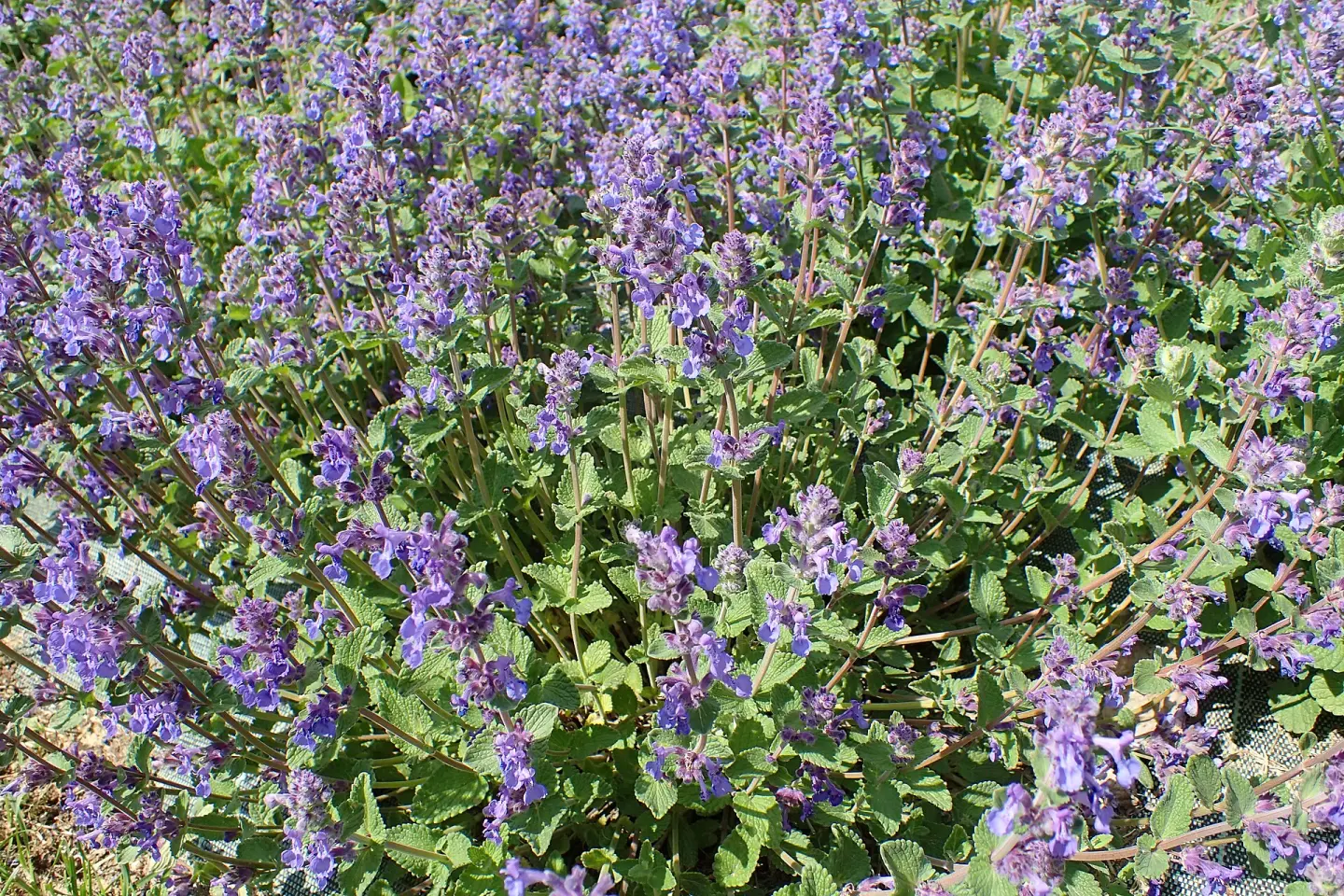
Photo: Krzysztof Ziarnek, Kenraiz · CC BY-SA 4.0, via Wikimedia Commons
Essential Care Requirements
Light
Full sun
Watering
Low
Drought tolerant once established; avoid wet soil in winter.
Soil
Well-drained, even poor soil; pH 6.0–8.0.
Temperature and humidity
-30–35 °C · Low humidity
Feeding
No feeding needed.
Pruning and propagation
Propagate by division, stem cuttings
Cut back by half after the first flush for more flowers. Hardy in USDA zones 4–8.
Catmint is not toxic. Some cats roll in it, though less than in catnip.
Top Cultivation Tips
Plant along paths where you can brush past it.
Sterile hybrids do not self-seed.
Loved by bees.
Deer- and rabbit-resistant.
Common problems
Powdery mildew
A fungal disease that coats leaves, buds and young shoots with a white, flour-like dust, weakening the plant and spoiling flowers and fruit.
How to treat it →DiseaseRoot rot
Roots decay in waterlogged soil, so the plant wilts and yellows even though the soil is wet.
How to treat it →