Jasmine (Mogra)
Jasminum sambac
Mogra is a bushy evergreen shrub with intensely fragrant white flowers that open in the evening. It blooms through the warm months, grows well in pots, and is loved for garlands, flower offerings and scenting balconies.
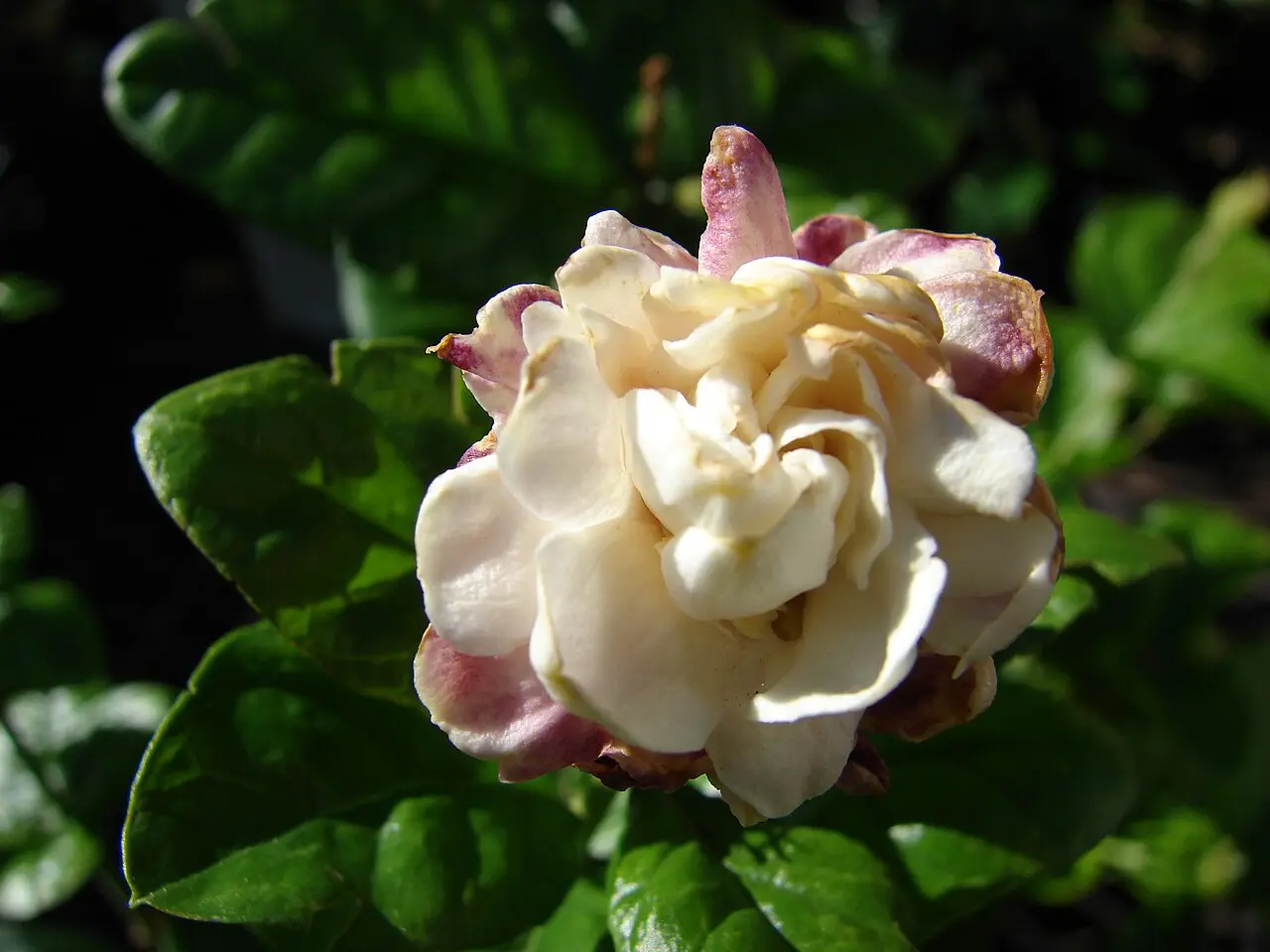
Photo: Forest and Kim Starr · CC BY 3.0, via Wikimedia Commons
Essential Care Requirements
Light
Full sun, Partial sun
Watering
Moderate
Water when the top 2–3 cm of soil is dry; potted plants may need daily water in peak summer. Cut back watering in winter when growth slows.
Soil
Fertile, well-drained soil with plenty of compost. In pots, mix soil, compost and sand or perlite.
Temperature and humidity
10–40 °C · Moderate humidity
Feeding
Feed every two to three weeks from spring through summer with a flowering-plant fertilizer, and add compost to the top of the pot each spring.
Pruning and propagation
Propagate by stem cuttings, layering
Prune hard at the end of winter, before new growth, cutting back by up to half. Flowers form on new shoots, so a good prune means more buds.
Jasminum sambac is not considered toxic to cats or dogs.
Top Cultivation Tips
Full sun gives the most flowers.
Pinch new shoots in spring for a bushier plant.
Check for mealybugs and whiteflies under the leaves.
Pick flowers daily to encourage more buds.
Common problems
Bud drop
Flower buds yellow and fall before opening, usually because the plant has been stressed by changes in water, light or temperature.
How to treat it →DiseaseIron chlorosis
Young leaves turn yellow while the veins stay green, usually because alkaline soil stops the plant taking up iron.
How to treat it →PestLace bugs
Small flat insects with lacy wings that feed under leaves, leaving the upper surface speckled pale and the underside spotted with black.
How to treat it →PestMealybugs
White, cottony insects that hide in leaf joints and under leaves, weakening plants and spreading easily to neighbours.
How to treat it →DiseaseRust
A fungal disease that forms orange, brown or yellow powdery pustules, mainly on leaf undersides.
How to treat it →PestSpider mites
Tiny sap-sucking mites that thrive in hot, dry conditions, causing speckled, dull leaves and fine webbing.
How to treat it →PestThrips
Tiny, slender insects that rasp leaf and flower surfaces, leaving silvery streaks, curled leaves and distorted flowers.
How to treat it →PestWhiteflies
Small white flying insects that gather under leaves, sucking sap, spreading viruses and leaving sticky honeydew.
How to treat it →