Anthurium
Anthurium andraeanum
Anthurium is a popular houseplant with glossy, heart-shaped leaves and long-lasting waxy spathes in red, pink or white. With bright indirect light and humidity, it flowers repeatedly through the year.
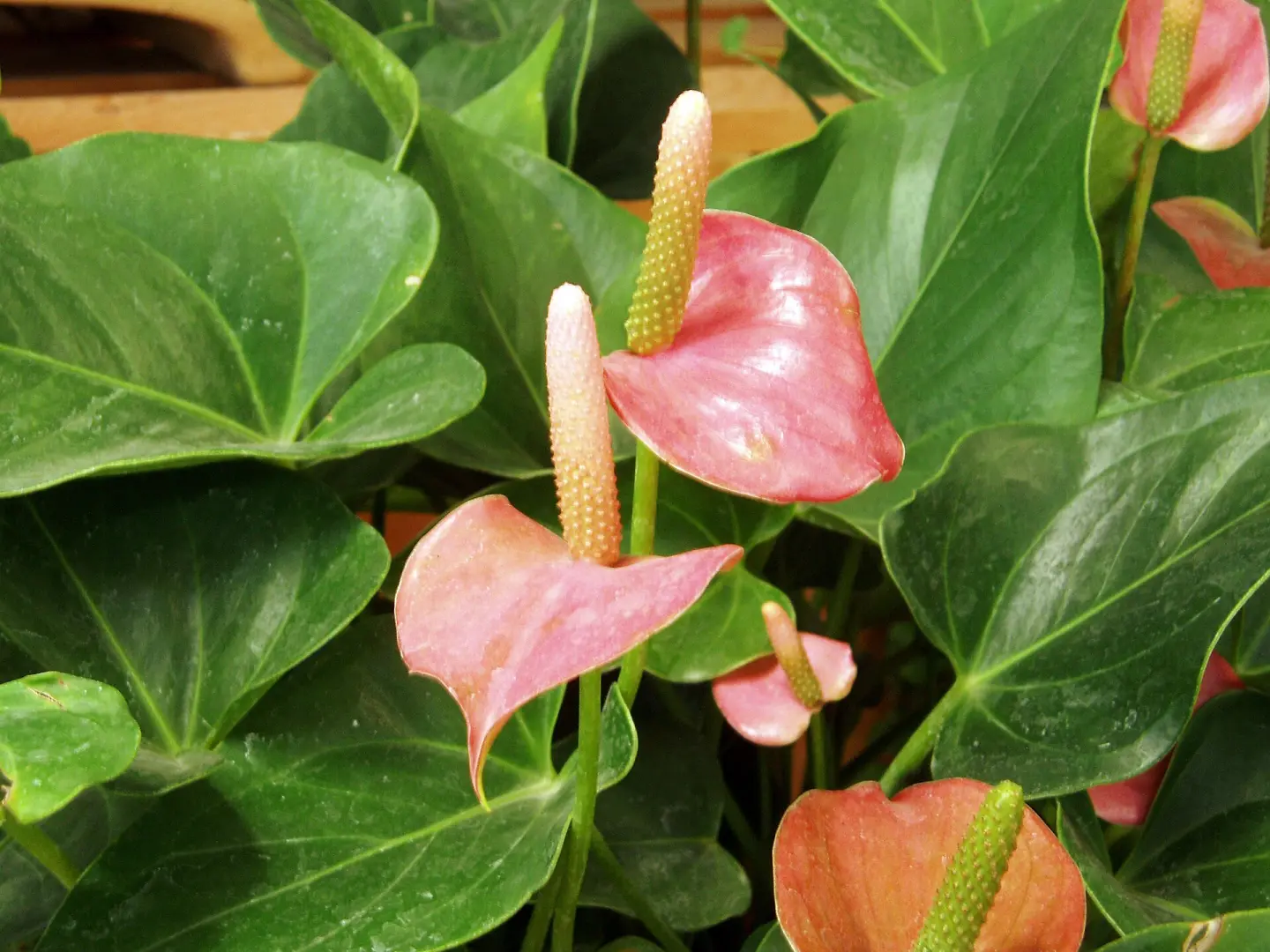
Photo: Taken by Fanghong · CC BY 2.5, via Wikimedia Commons
Essential Care Requirements
Light
Bright indirect light
Watering
Moderate
Water when the top 2–3 cm of the mix is dry. Never let it sit in water.
Soil
Very airy mix of orchid bark, cocopeat, charcoal and perlite; pH 5.5–6.5.
Temperature and humidity
15–32 °C · High humidity
Feeding
Feed every two to four weeks with a diluted phosphorus-rich fertilizer for more flowers.
Pruning and propagation
Propagate by division, stem cuttings
Cut faded flowers and old yellow leaves at the base.
The leaves and flowers contain calcium oxalate crystals that irritate the mouth and stomach of people and pets.
Top Cultivation Tips
Bright indirect light is needed for flowering.
Mist or use a humidity tray in dry weather.
Repot every two years into fresh bark mix.
Cut flowers last for weeks in a vase.
Common problems
Leaf spot
Fungal or bacterial infections that cause brown, black or purple spots on leaves, often with a yellow halo, leading to early leaf drop.
How to treat it →DiseaseLow humidity damage
Browning, curling and crisping of leaf edges and tips on tropical plants kept in dry air, often indoors in winter.
How to treat it →PestMealybugs
White, cottony insects that hide in leaf joints and under leaves, weakening plants and spreading easily to neighbours.
How to treat it →DiseaseRoot rot
Roots decay in waterlogged soil, so the plant wilts and yellows even though the soil is wet.
How to treat it →PestScale insects
Immobile, shell-covered insects that cling to stems and leaves, draining sap and weakening trees and houseplants.
How to treat it →