Climbing Hydrangea
Hydrangea anomala subsp. petiolaris
This self-clinging deciduous climber has heart-shaped glossy leaves, peeling reddish bark and large, lacy white flower heads in early summer. It is slow at first, but then covers shady walls and old trees with a wide display for decades.
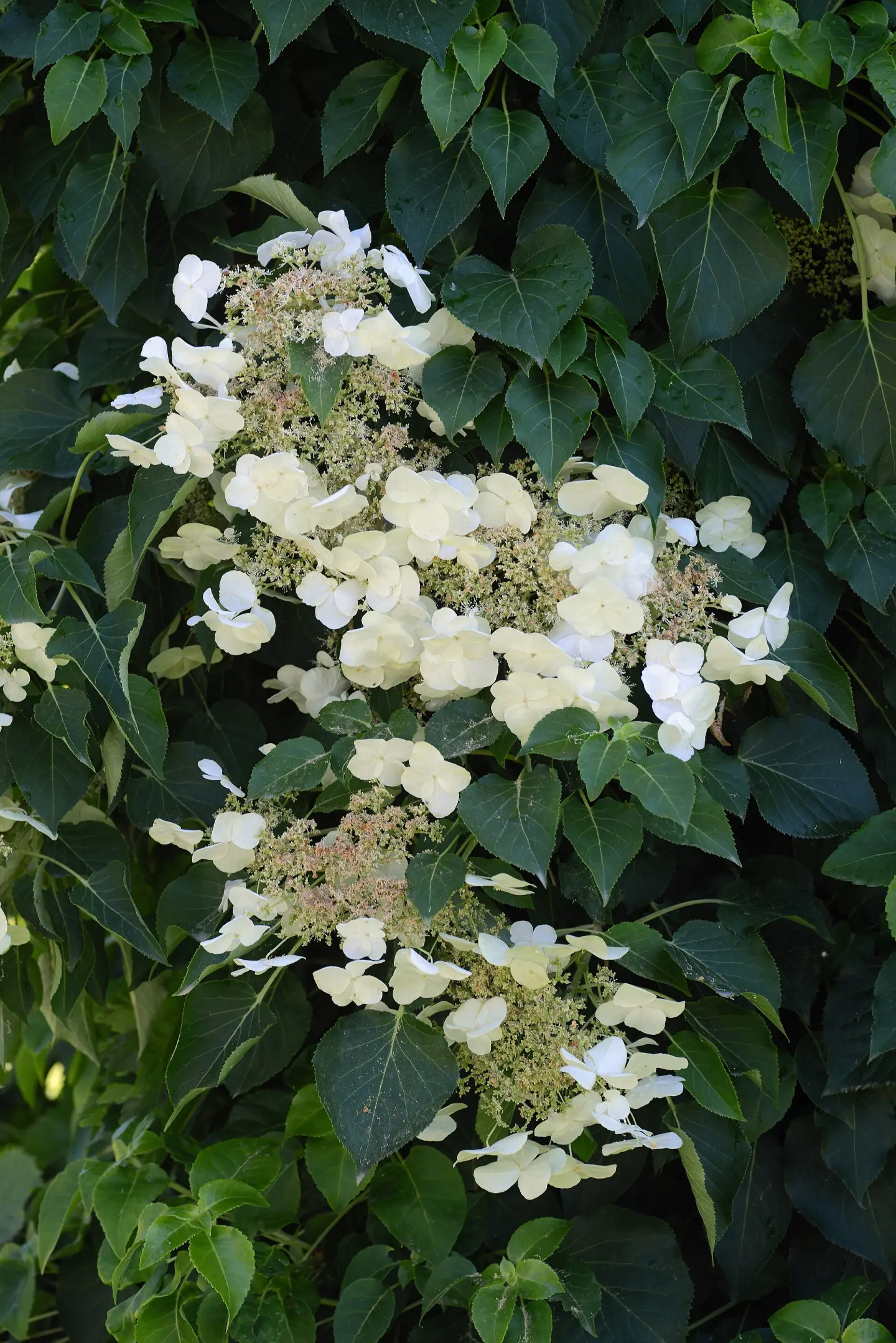
Photo: Alvesgaspar · CC BY-SA 3.0, via Wikimedia Commons
Essential Care Requirements
Light
Partial sun, Low light, Full sun
Watering
Moderate
Water well in the first two years, then in dry spells. Mulch to retain moisture.
Soil
Moist, humus-rich, well-drained soil; pH 5.5 to 7.0.
Temperature and humidity
-30–28 °C · Moderate humidity
Feeding
Mulch with compost in spring. Light feeding with a balanced fertilizer helps establishment.
Pruning and propagation
Propagate by stem cuttings, layering
Needs little pruning. Trim after flowering to control size and remove dead stems.
Mildly toxic if eaten. Leaves and buds contain compounds that can upset the stomach.
Top Cultivation Tips
Plant against a sturdy wall or tree, because stems cling firmly and become heavy.
Be patient, as it may take 3 to 5 years to flower.
Keep roots cool and moist with mulch.
Layer a long stem to make new plants.
Common problems
Aphids
Small, soft-bodied insects that cluster on new shoots and buds, sucking sap and leaving sticky honeydew behind.
How to treat it →DiseaseLeaf spot
Fungal or bacterial infections that cause brown, black or purple spots on leaves, often with a yellow halo, leading to early leaf drop.
How to treat it →DiseasePowdery mildew
A fungal disease that coats leaves, buds and young shoots with a white, flour-like dust, weakening the plant and spoiling flowers and fruit.
How to treat it →PestVine weevil
Adult beetles notch leaf edges at night, while their soil-dwelling grubs eat roots, often killing container plants before you notice.
How to treat it →