Daffodil
Narcissus spp. and hybrids
Daffodils are cheerful spring bulbs with trumpet-shaped yellow, white or orange flowers. They come back year after year, multiply over time and are ignored by deer and rodents because they are poisonous.
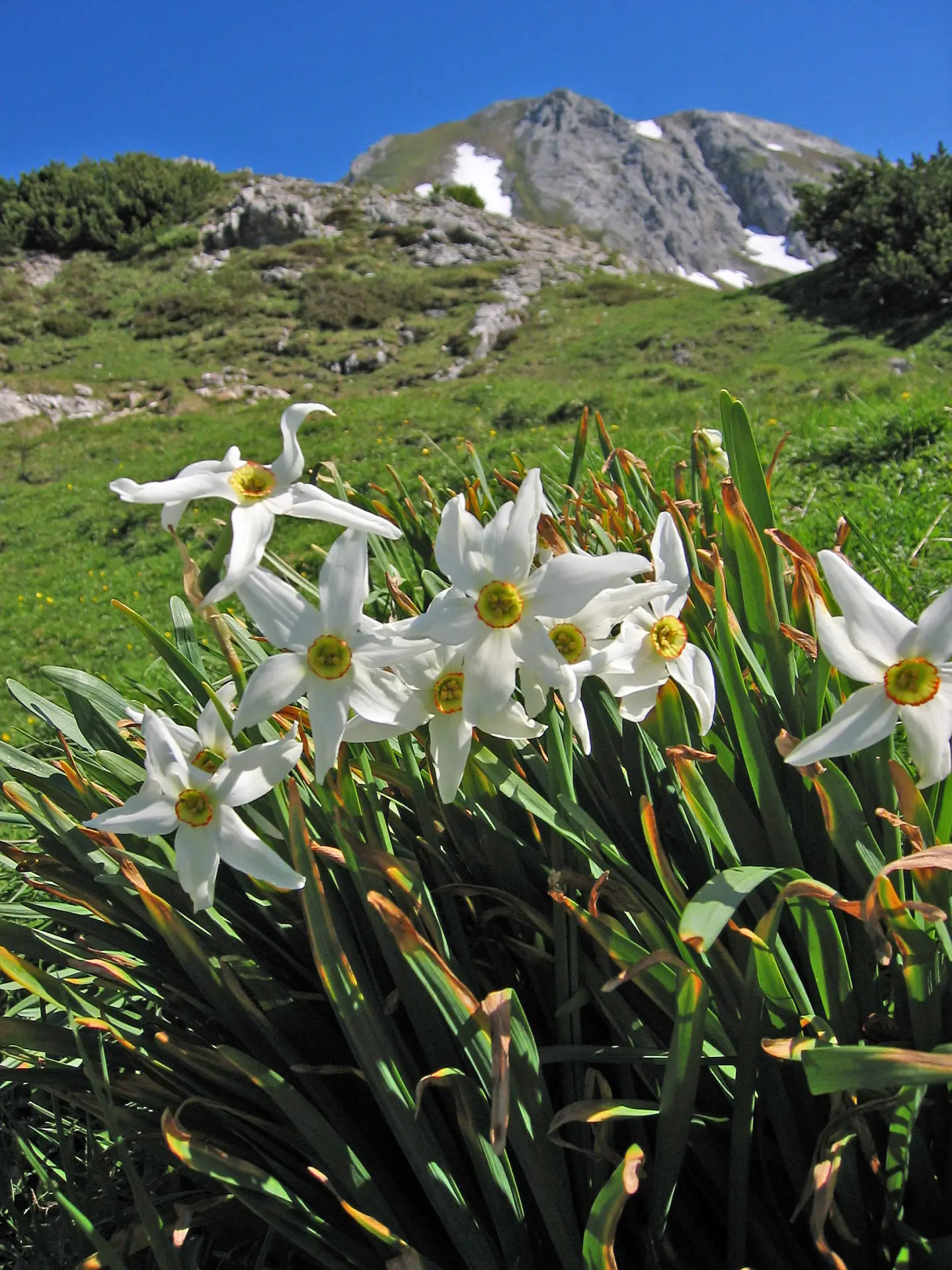
Photo: Olei (Wikimedia Commons) · CC BY-SA 3.0, via Wikimedia Commons
Essential Care Requirements
Light
Full sun, Partial sun
Watering
Moderate
Water during dry spells while in growth; keep drier in summer dormancy.
Soil
Well-drained soil; pH 6.0–7.0.
Temperature and humidity
-30–25 °C · Moderate humidity
Feeding
Feed with a potassium-rich fertilizer as flowers fade.
Pruning and propagation
Propagate by offsets, division
Deadhead, and leave leaves for at least six weeks after flowering before removing them.
All parts are toxic, especially the bulbs, which are sometimes mistaken for onions. Sap irritates skin and harms cut flowers sharing the same vase.
Top Cultivation Tips
Plant in autumn, 10–15 cm deep.
Divide clumps when flowering declines.
Paperwhite types flower in warm climates without chilling.
Condition cut stems alone overnight before mixing with other flowers.
Common problems
Grey mould
A fungal rot that covers flowers, fruit and soft stems with fuzzy grey mould in cool, damp conditions.
How to treat it →DiseaseRoot rot
Roots decay in waterlogged soil, so the plant wilts and yellows even though the soil is wet.
How to treat it →PestSnails and slugs
Night-feeding molluscs that chew ragged holes in leaves, seedlings and soft stems, especially in wet weather.
How to treat it →