Daylily
Hemerocallis hybrids
Daylilies form clumps of arching, grassy leaves with tall stems of trumpet-shaped flowers, each lasting a single day but produced in succession for weeks. They are tough, adaptable and come in many colours.
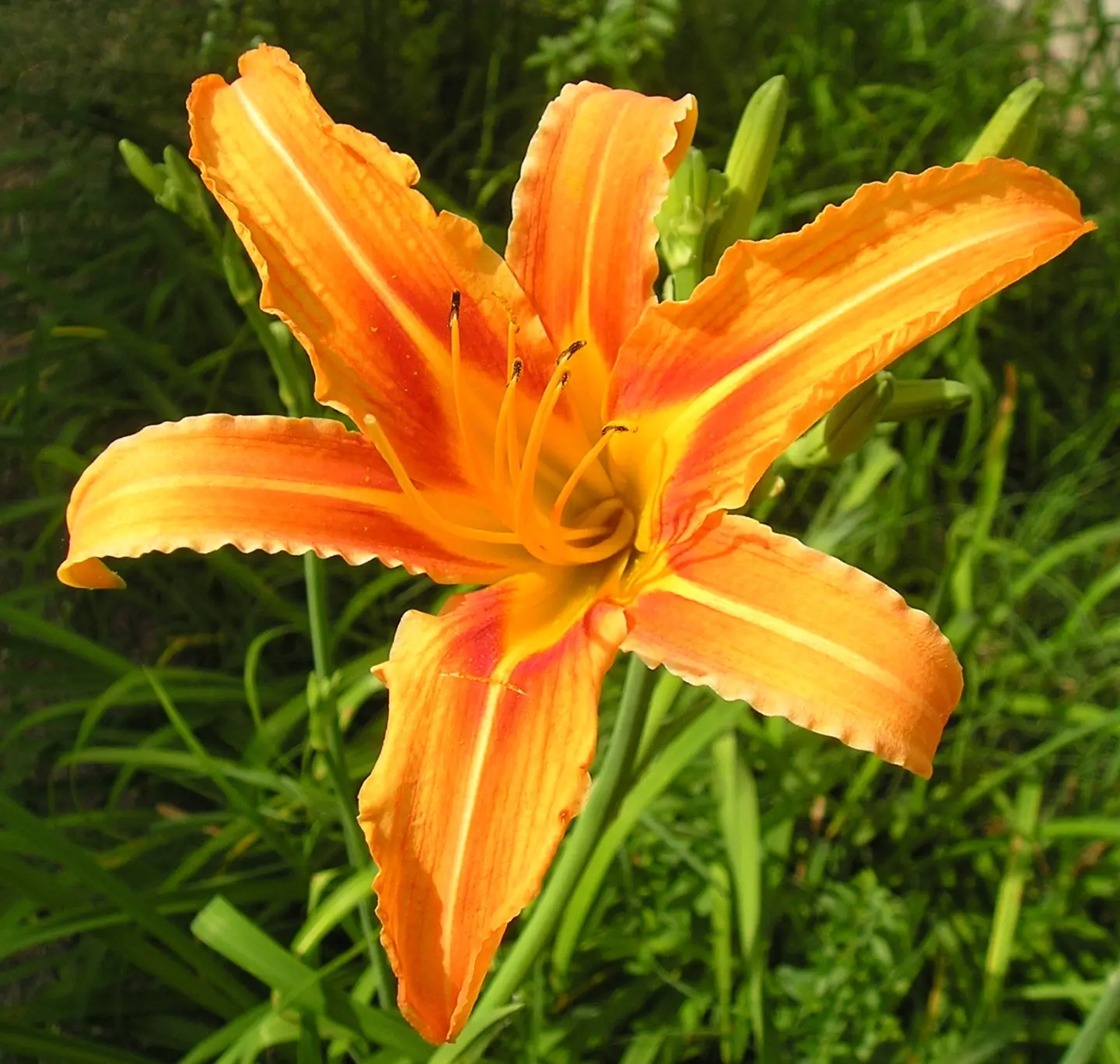
Photo: en:User:Laineypaige · CC BY-SA 3.0, via Wikimedia Commons
Essential Care Requirements
Light
Full sun, Partial sun
Watering
Moderate
Water regularly while flowering; established clumps tolerate dry spells.
Soil
Most well-drained soils; pH 6.0–7.0.
Temperature and humidity
-15–38 °C · Moderate humidity
Feeding
Feed in spring with a balanced fertilizer.
Pruning and propagation
Propagate by division
Remove spent flowers and cut flower stems at the base when finished.
Daylilies are extremely toxic to cats: even small amounts of leaf, flower or pollen can cause kidney failure. They are not toxic to dogs or people.
Top Cultivation Tips
Do not grow where cats can reach.
Divide clumps every 3–4 years.
Give afternoon shade in hot plains.
Reblooming varieties flower twice.
Common problems
Aphids
Small, soft-bodied insects that cluster on new shoots and buds, sucking sap and leaving sticky honeydew behind.
How to treat it →DiseaseRust
A fungal disease that forms orange, brown or yellow powdery pustules, mainly on leaf undersides.
How to treat it →PestThrips
Tiny, slender insects that rasp leaf and flower surfaces, leaving silvery streaks, curled leaves and distorted flowers.
How to treat it →