Flowering plantsEasy CarePet Safe
Fountain Grass
Cenchrus alopecuroides (syn. Pennisetum)
Fountain grass forms arching clumps of narrow leaves topped with soft, bottlebrush plumes from late summer. It adds movement and texture to borders and pots and looks good well into winter.
Botanical FamilyPoaceae
Native RegionEast Asia and Australia
Growth RateFast
Mature Size60–120 cm tall
Bloom PeriodLate summer to autumn
Common NamesPennisetum, Chinese fountain grass
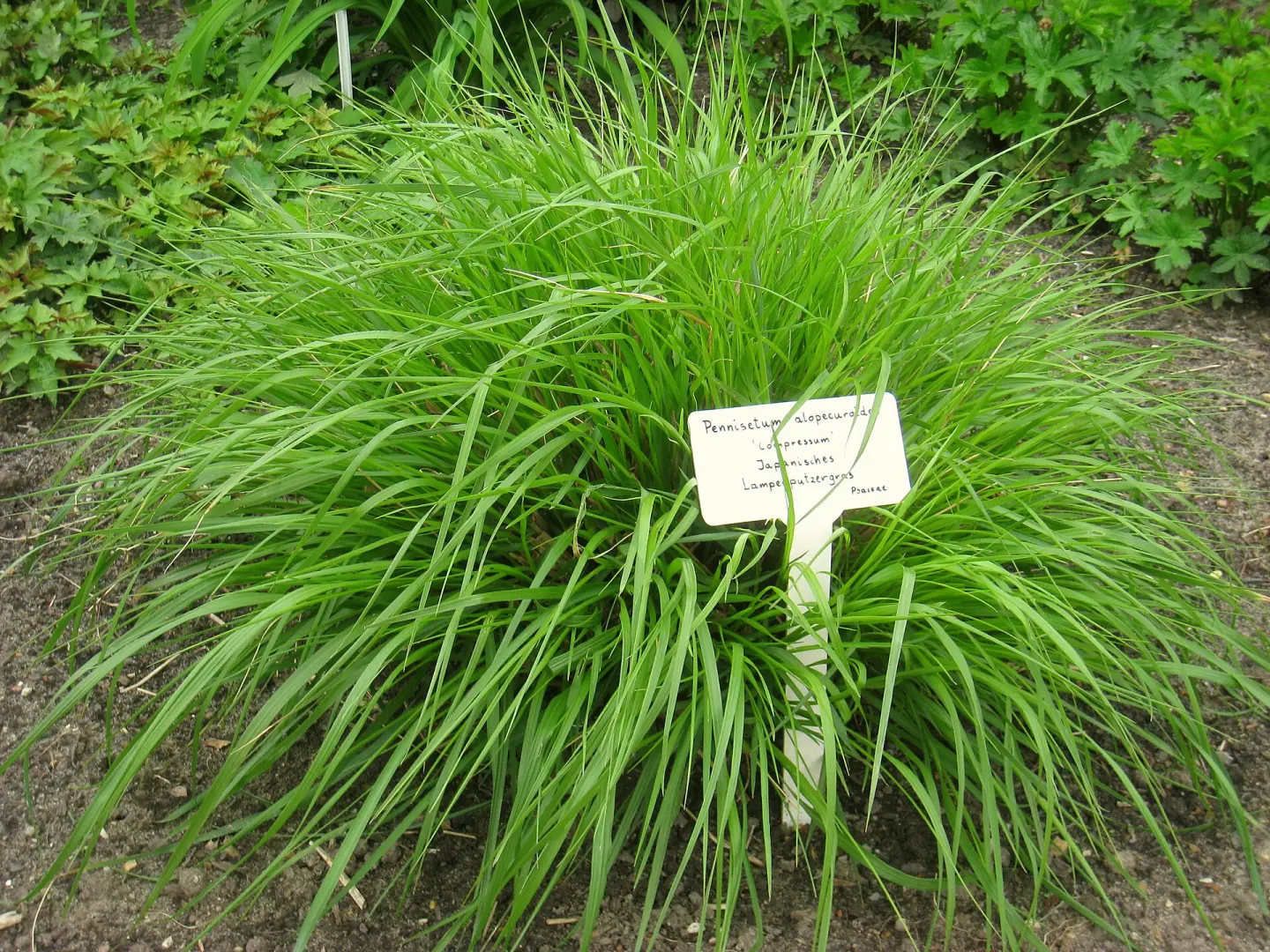
Photo: Daderot · Public domain, via Wikimedia Commons
Essential Care Requirements
Light
Full sun
Watering
Moderate
Water regularly until established; then only in long dry spells.
Soil
Well-drained soil; pH 6.0–7.5.
Temperature and humidity
-25–40 °C · Moderate humidity
Feeding
Little feeding needed.
Pruning and propagation
Propagate by division, seed
Cut to 10 cm in late winter before new growth.
Fountain grass is not toxic.
Top Cultivation Tips
Choose sterile varieties; purple fountain grass (C. setaceum) is invasive in some warm regions.
Divide clumps in spring.
Plumes catch evening light beautifully.
Good in coastal gardens.