Globe Thistle
Echinops ritro
Globe thistles produce spiky, steel-blue spheres on tall stems above thistle-like silvery foliage. They are tough, drought-tolerant perennials, magnets for bees and butterflies and good for dried flower arrangements.
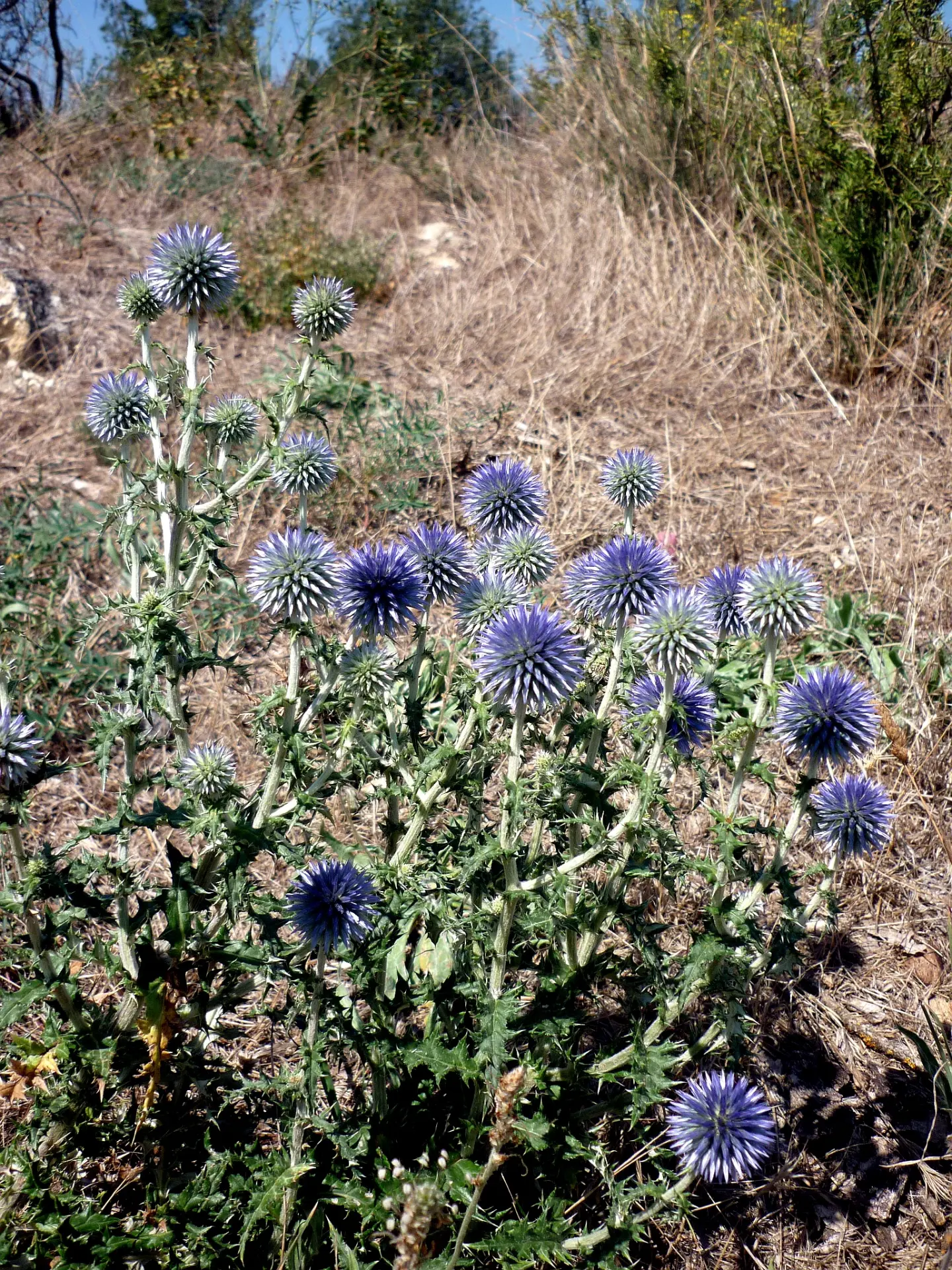
Photo: Isidre blanc · CC BY-SA 4.0, via Wikimedia Commons
Essential Care Requirements
Light
Full sun
Watering
Low
Water new plants until established. Mature plants are very drought tolerant and dislike wet soil.
Soil
Light to poor, well-drained soil, any pH; pH 6.0 to 8.0.
Temperature and humidity
-25–32 °C · Low humidity
Feeding
No feeding. Rich soil gives weak, floppy stems.
Pruning and propagation
Propagate by seed, division
Cut flower stems after blooming and cut the whole plant to the base in late autumn or early spring.
Non-toxic. The spiny leaves can scratch bare skin.
Top Cultivation Tips
Cut stems just as the globes turn blue for drying.
Divide old clumps in spring or take root cuttings in winter.
Wear gloves when handling the prickly foliage.
Plant at the back of a sunny border.
Common problems
Aphids
Small, soft-bodied insects that cluster on new shoots and buds, sucking sap and leaving sticky honeydew behind.
How to treat it →PestLeaf miners
Larvae of small flies and moths that tunnel inside leaves, leaving pale, winding trails.
How to treat it →DiseasePowdery mildew
A fungal disease that coats leaves, buds and young shoots with a white, flour-like dust, weakening the plant and spoiling flowers and fruit.
How to treat it →DiseaseRoot rot
Roots decay in waterlogged soil, so the plant wilts and yellows even though the soil is wet.
How to treat it →