Hollyhock
Alcea rosea
Hollyhocks are tall, stately plants with spires of large, open flowers in pink, red, white, yellow and near-black. They are classic cottage-garden flowers for the back of a border or against a wall.
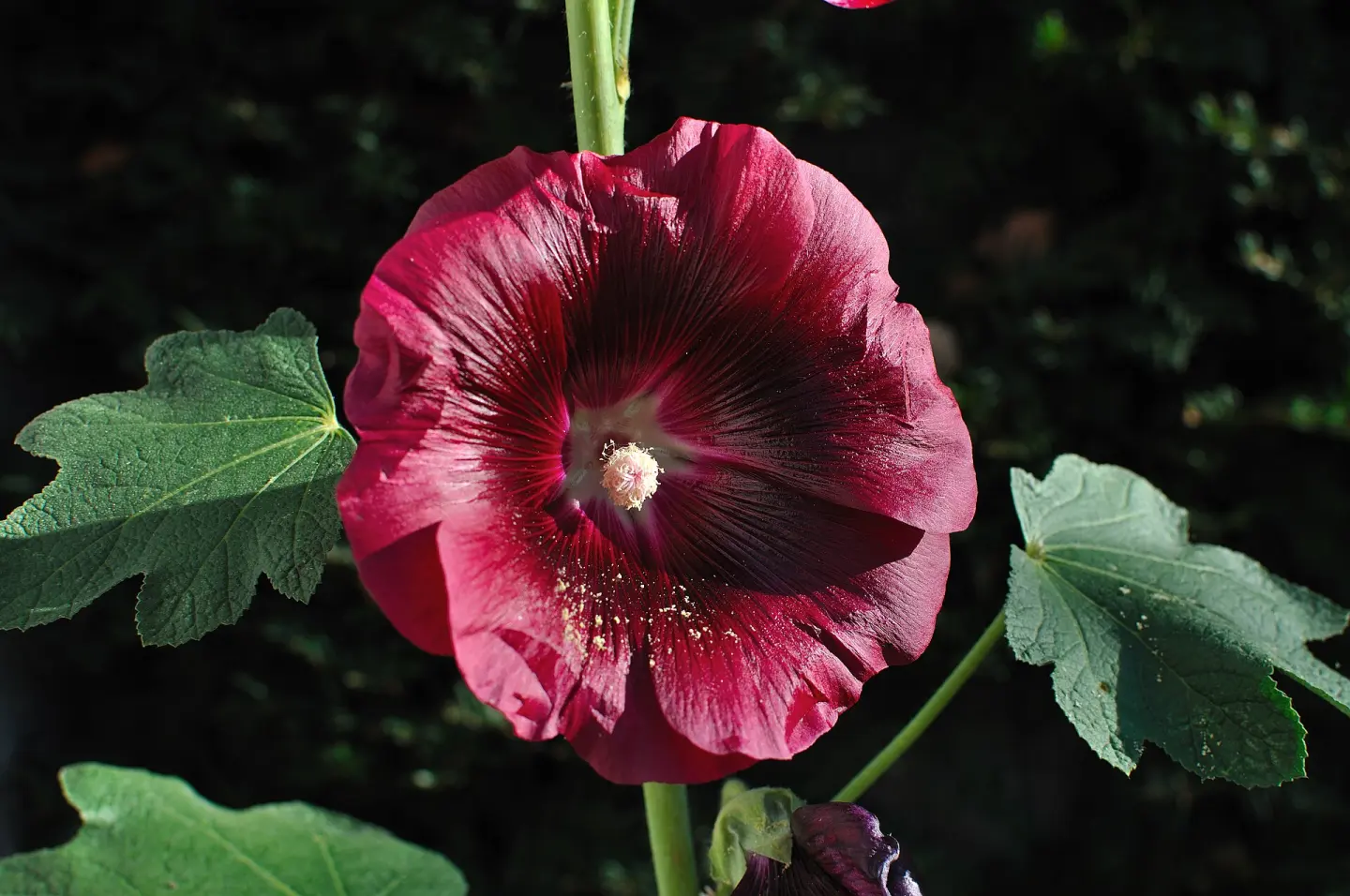
Photo: PJDespa · CC BY-SA 3.0, via Wikimedia Commons
Essential Care Requirements
Light
Full sun
Watering
Moderate
Water at the base regularly; avoid wetting leaves, which encourages rust.
Soil
Fertile, well-drained soil; pH 6.0–7.5.
Temperature and humidity
0–32 °C · Moderate humidity
Feeding
Feed monthly with a balanced fertilizer.
Pruning and propagation
Propagate by seed
Stake tall spikes and cut them back after flowering.
Hollyhocks are not toxic; leaf hairs can irritate sensitive skin.
Top Cultivation Tips
Sow in September–October in the plains.
Plant against a wall for support.
Remove rust-spotted leaves early.
Single forms attract bees.
Common problems
Aphids
Small, soft-bodied insects that cluster on new shoots and buds, sucking sap and leaving sticky honeydew behind.
How to treat it →PestCaterpillars
The larvae of moths and butterflies, which chew holes in leaves, flowers and fruit and can strip a plant in days.
How to treat it →DiseaseRust
A fungal disease that forms orange, brown or yellow powdery pustules, mainly on leaf undersides.
How to treat it →