Hosta
Hosta spp. and hybrids
Hostas are shade-loving perennials grown for their bold leaves in blue, green, gold and variegated forms, with spikes of lilac or white flowers in summer. They are mainstays of shady temperate gardens.
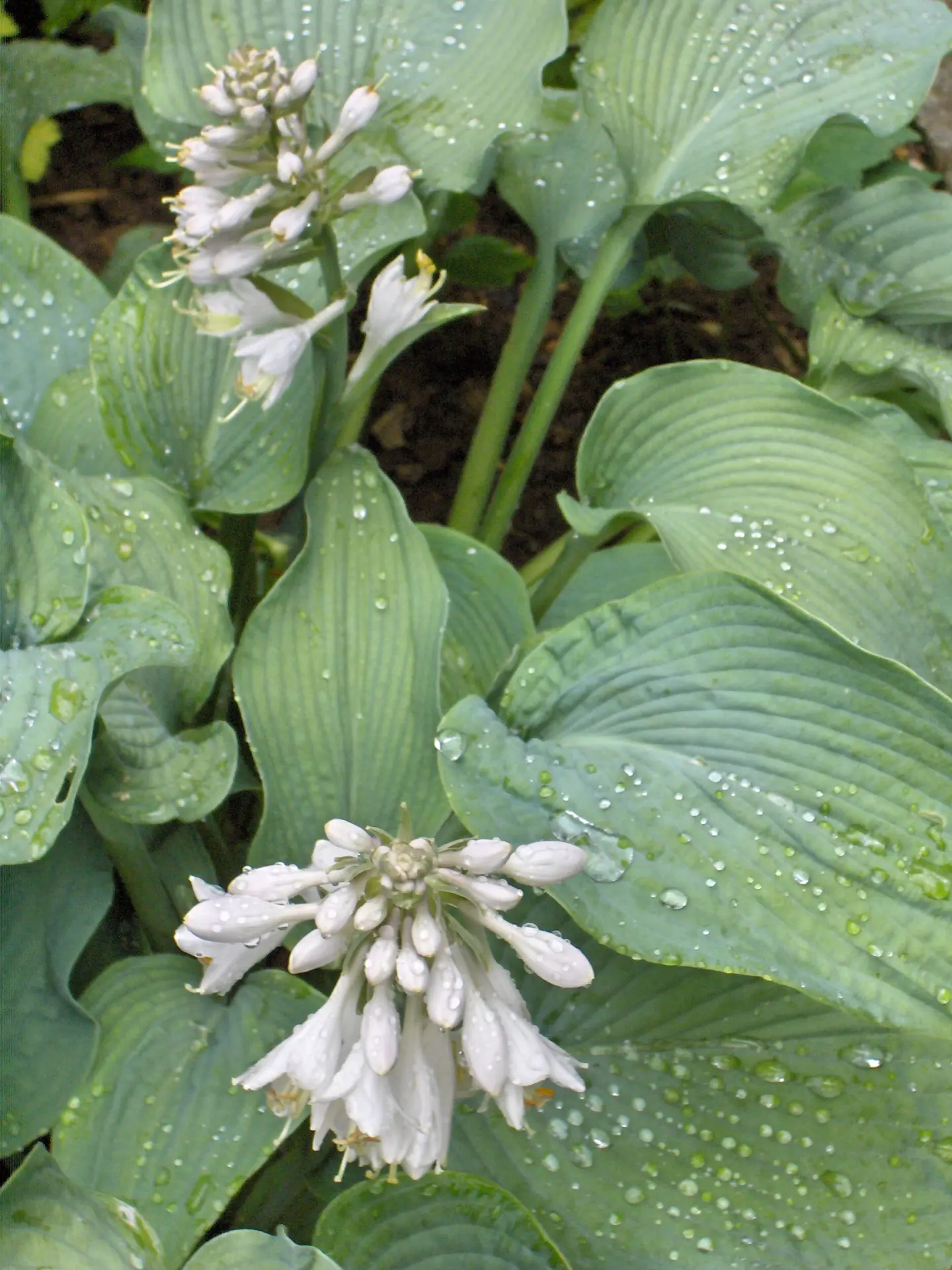
Photo: Qwertzy2 (Wikimedia Commons) · CC BY-SA 3.0, via Wikimedia Commons
Essential Care Requirements
Light
Partial sun, Low light
Watering
Moderate
Keep the soil evenly moist, especially in summer.
Soil
Rich, moist, well-drained soil; pH 6.0–7.5.
Temperature and humidity
-35–30 °C · Moderate humidity
Feeding
Feed in spring with a balanced fertilizer and mulch with compost.
Pruning and propagation
Propagate by division
Remove faded flower stalks and tidy dead leaves in autumn.
Hostas can cause vomiting and diarrhoea in cats and dogs.
Top Cultivation Tips
Blue-leaved types keep their colour best in shade.
Protect young shoots from slugs.
Divide clumps in spring.
Needs a cold winter to thrive.
Common problems
Deer and rabbit damage
Deer and rabbits browse leaves, buds and bark, causing ragged stems, missing shoots and girdled trunks.
How to treat it →DiseaseLeaf scorch
Brown, dry, crisp edges and patches on leaves, usually caused by too little water reaching the leaves in hot, windy or dry weather.
How to treat it →DiseaseLeaf spot
Fungal or bacterial infections that cause brown, black or purple spots on leaves, often with a yellow halo, leading to early leaf drop.
How to treat it →DiseaseRoot rot
Roots decay in waterlogged soil, so the plant wilts and yellows even though the soil is wet.
How to treat it →PestSnails and slugs
Night-feeding molluscs that chew ragged holes in leaves, seedlings and soft stems, especially in wet weather.
How to treat it →DiseaseSouthern blight
A soil-borne fungal disease of hot, humid climates that rots stems at the soil line under a white fan of mould dotted with tiny round seed-like bodies.
How to treat it →PestVoles
Small rodents that gnaw bark at the base of young trees, eat bulbs and roots, and make runways through grass and mulch.
How to treat it →