Lupin
Lupinus polyphyllus hybrids
Lupins send up dense spires of pea-like flowers in vivid colours above clumps of hand-shaped leaves in early summer. Like other legumes, they improve soil nitrogen.
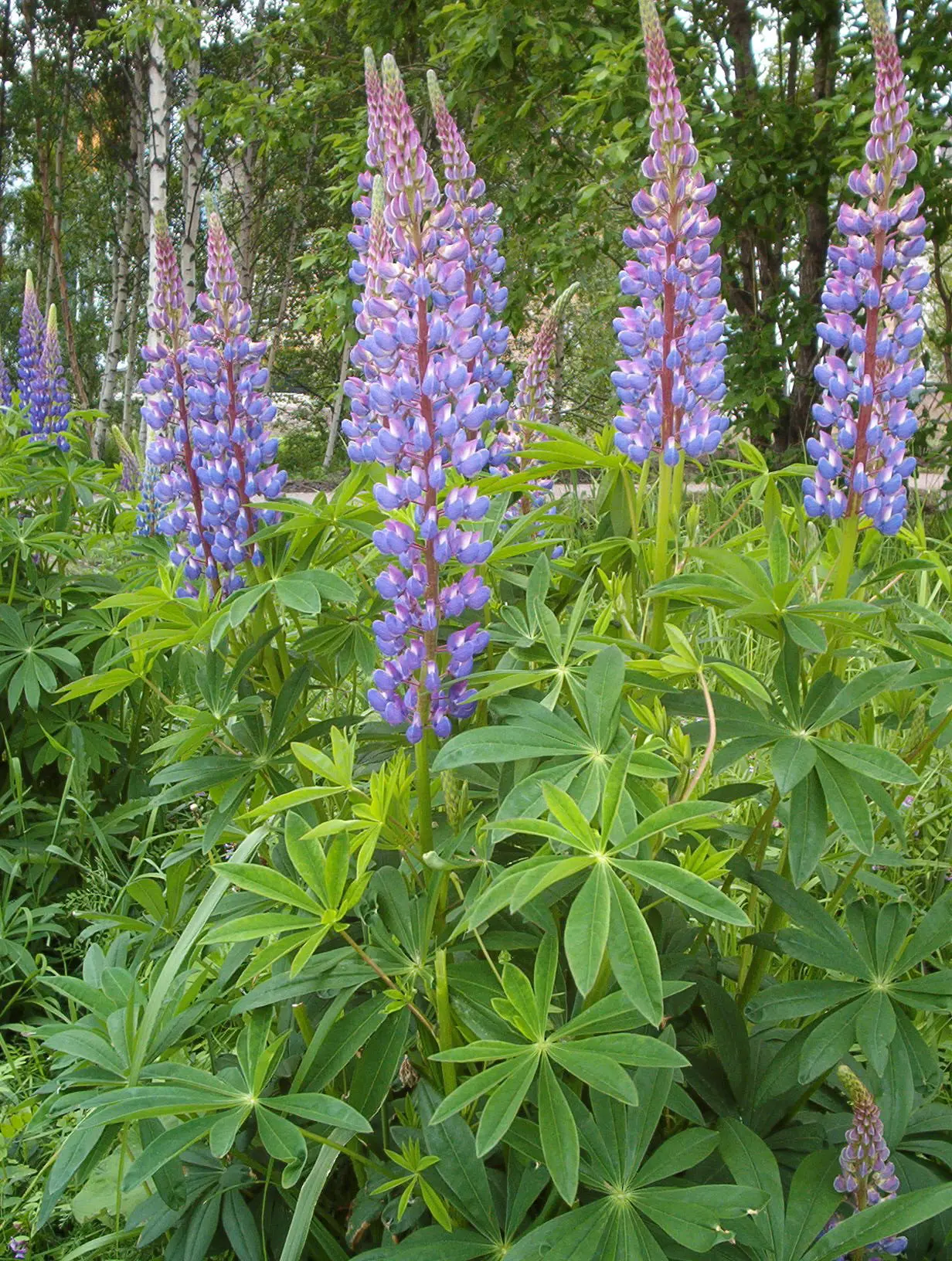
Photo: Banana patrol (Wikimedia Commons) · CC BY-SA 3.0, via Wikimedia Commons
Essential Care Requirements
Light
Full sun, Partial sun
Watering
Moderate
Water in dry spells; avoid waterlogging.
Soil
Light, well-drained, slightly acidic soil; pH 5.5–7.0.
Temperature and humidity
-30–27 °C · Moderate humidity
Feeding
Little feeding needed.
Pruning and propagation
Propagate by seed, stem cuttings
Deadhead spikes for a second, smaller flush.
The seeds and pods of garden lupins are toxic if eaten.
Top Cultivation Tips
Nick seeds and soak before sowing.
Protect young growth from slugs.
Short-lived; replace every few years.
Lupin aphids can be severe; check stems.
Common problems
Aphids
Small, soft-bodied insects that cluster on new shoots and buds, sucking sap and leaving sticky honeydew behind.
How to treat it →DiseasePowdery mildew
A fungal disease that coats leaves, buds and young shoots with a white, flour-like dust, weakening the plant and spoiling flowers and fruit.
How to treat it →PestSnails and slugs
Night-feeding molluscs that chew ragged holes in leaves, seedlings and soft stems, especially in wet weather.
How to treat it →