Maranta
Maranta leuconeura
Maranta, the true prayer plant, has oval leaves patterned with red veins and dark blotches that fold upright at night like praying hands. It is a low, spreading plant for bright, humid rooms.
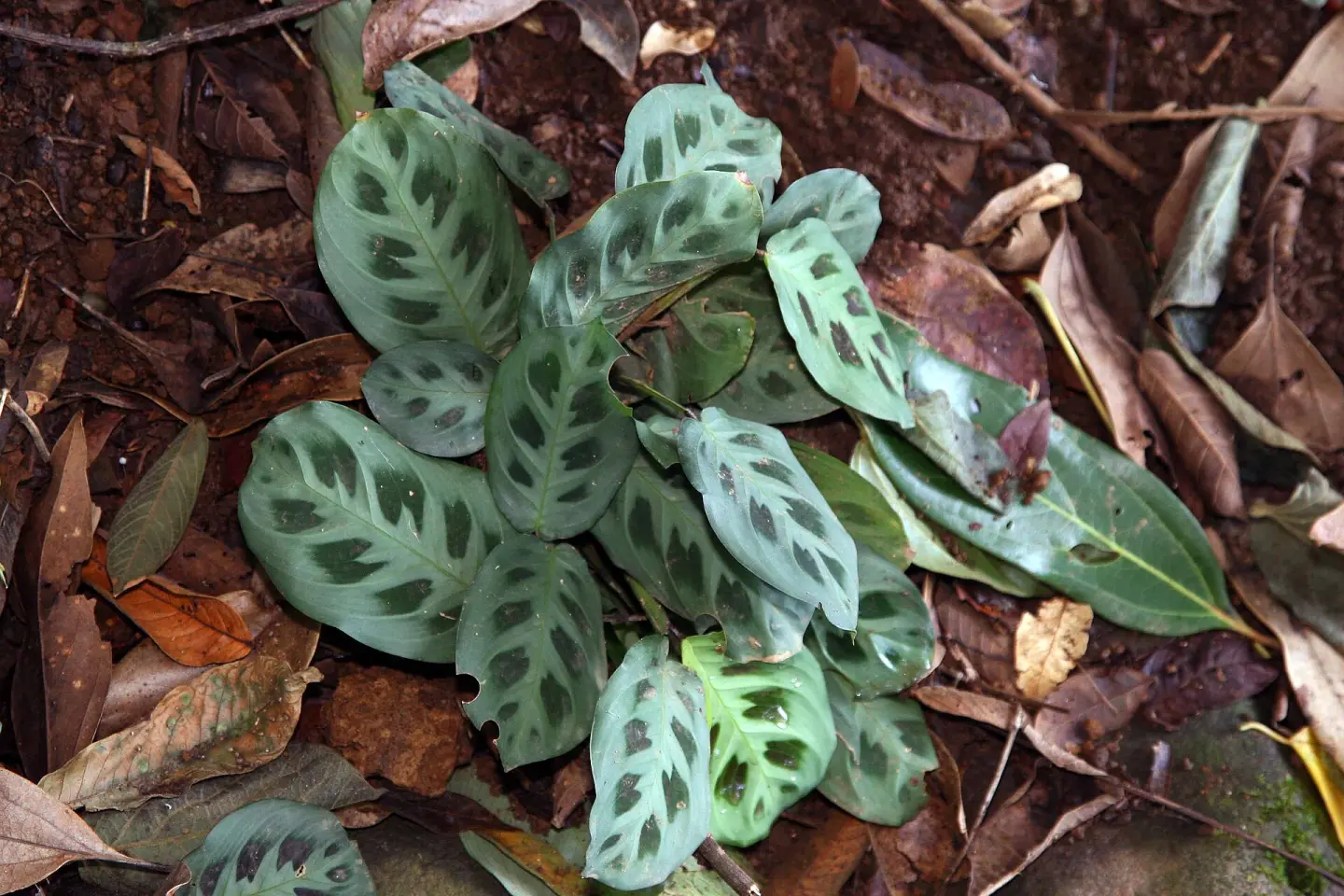
Photo: Photo by David J. Stang · CC BY-SA 4.0, via Wikimedia Commons
Essential Care Requirements
Light
Bright indirect light, Low light
Watering
Moderate
Keep the soil lightly moist with soft or filtered water; dry soil causes brown, curled leaves.
Soil
Moisture-retentive, airy mix with cocopeat and perlite; pH 5.5–6.5.
Temperature and humidity
16–30 °C · High humidity
Feeding
Feed monthly in spring and summer with a half-strength fertilizer.
Pruning and propagation
Propagate by stem cuttings, division
Trim leggy stems just above a node to keep it bushy.
Maranta is not toxic to people, cats or dogs.
Top Cultivation Tips
Suits a hanging pot where trailing stems show.
Keep out of direct sun to protect leaf colour.
Stem cuttings root in water.
Brown tips mean the air is too dry or the water too hard.
Common problems
Brown leaf tips
Dry, brown, crisp tips on the leaves of houseplants, caused by dry air, uneven watering or a build-up of salts and minerals.
How to treat it →DiseaseLow humidity damage
Browning, curling and crisping of leaf edges and tips on tropical plants kept in dry air, often indoors in winter.
How to treat it →PestMealybugs
White, cottony insects that hide in leaf joints and under leaves, weakening plants and spreading easily to neighbours.
How to treat it →DiseaseRoot rot
Roots decay in waterlogged soil, so the plant wilts and yellows even though the soil is wet.
How to treat it →PestSpider mites
Tiny sap-sucking mites that thrive in hot, dry conditions, causing speckled, dull leaves and fine webbing.
How to treat it →