Marigold
Tagetes erecta
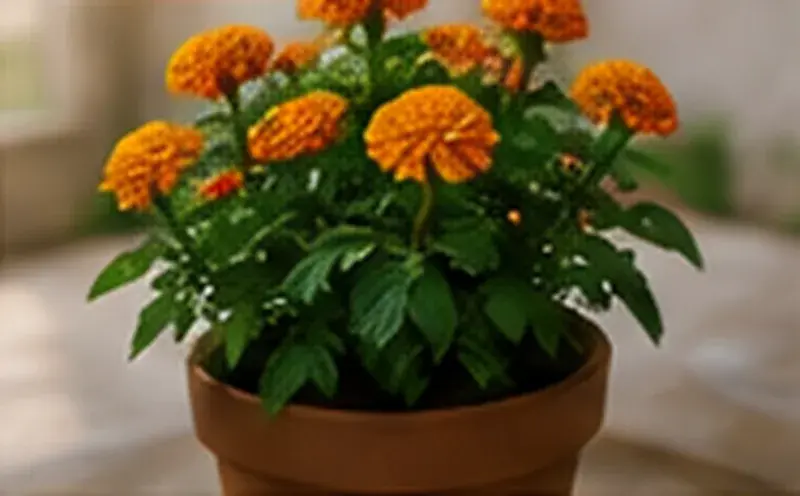
Marigolds are cheerful, fast-growing annuals with pompom flowers in yellow and orange. They flower for months, are easy to grow from seed, and are often planted among vegetables to attract pollinators and predatory insects.
Essential Care Requirements
Light
Full sun
Watering
Moderate
Water at the base when the top of the soil is dry. Marigolds tolerate short dry spells but rot in waterlogged soil, so avoid overwatering in cool weather.
Soil
Average, well-drained soil; very rich soil gives lots of leaves and fewer flowers. A pH of 6.0–7.0 is ideal.
Temperature and humidity
10–35 °C · Low humidity
Feeding
A little compost at planting is usually enough. Feed with a diluted flowering-plant fertilizer once a month if growth slows.
Pruning and propagation
Propagate by seed, stem cuttings
Pinch the tips of young plants once for bushier growth, and deadhead faded flowers to keep new blooms coming.
Tagetes is generally considered non-toxic, though the sap can irritate sensitive skin.
Top Cultivation Tips
Sow in October for winter flowers in South Asia.
Save seed from the best flowers for next year.
Plant among tomatoes and brinjal to attract beneficial insects.
Watch for spider mites in hot, dry weather.
Common problems
Blister beetles
Long, narrow, soft-bodied beetles that swarm over leaves and flowers, and release a chemical that causes painful blisters on skin.
How to treat it →PestCutworms
Fat, greyish caterpillars that hide in the soil by day and chew through young seedlings at ground level at night.
How to treat it →DiseaseDamping off
Soil-borne fungi that rot seeds and young seedlings at soil level, causing them to collapse suddenly.
How to treat it →PestEarwigs
Brown, pincer-tailed insects that hide by day and chew holes in petals, soft leaves and ripe fruit at night, but also eat aphids.
How to treat it →DiseaseLeggy growth
Long, thin, pale stems with widely spaced leaves, caused when a plant stretches toward light because it is not getting enough.
How to treat it →DiseasePowdery mildew
A fungal disease that coats leaves, buds and young shoots with a white, flour-like dust, weakening the plant and spoiling flowers and fruit.
How to treat it →PestSnails and slugs
Night-feeding molluscs that chew ragged holes in leaves, seedlings and soft stems, especially in wet weather.
How to treat it →PestSpider mites
Tiny sap-sucking mites that thrive in hot, dry conditions, causing speckled, dull leaves and fine webbing.
How to treat it →PestThrips
Tiny, slender insects that rasp leaf and flower surfaces, leaving silvery streaks, curled leaves and distorted flowers.
How to treat it →