Peony
Paeonia lactiflora and hybrids
Peonies are long-lived perennials with lush leaves and huge, often fragrant flowers in late spring. Once established they can flower in the same spot for decades, but they need cold winters to bloom.
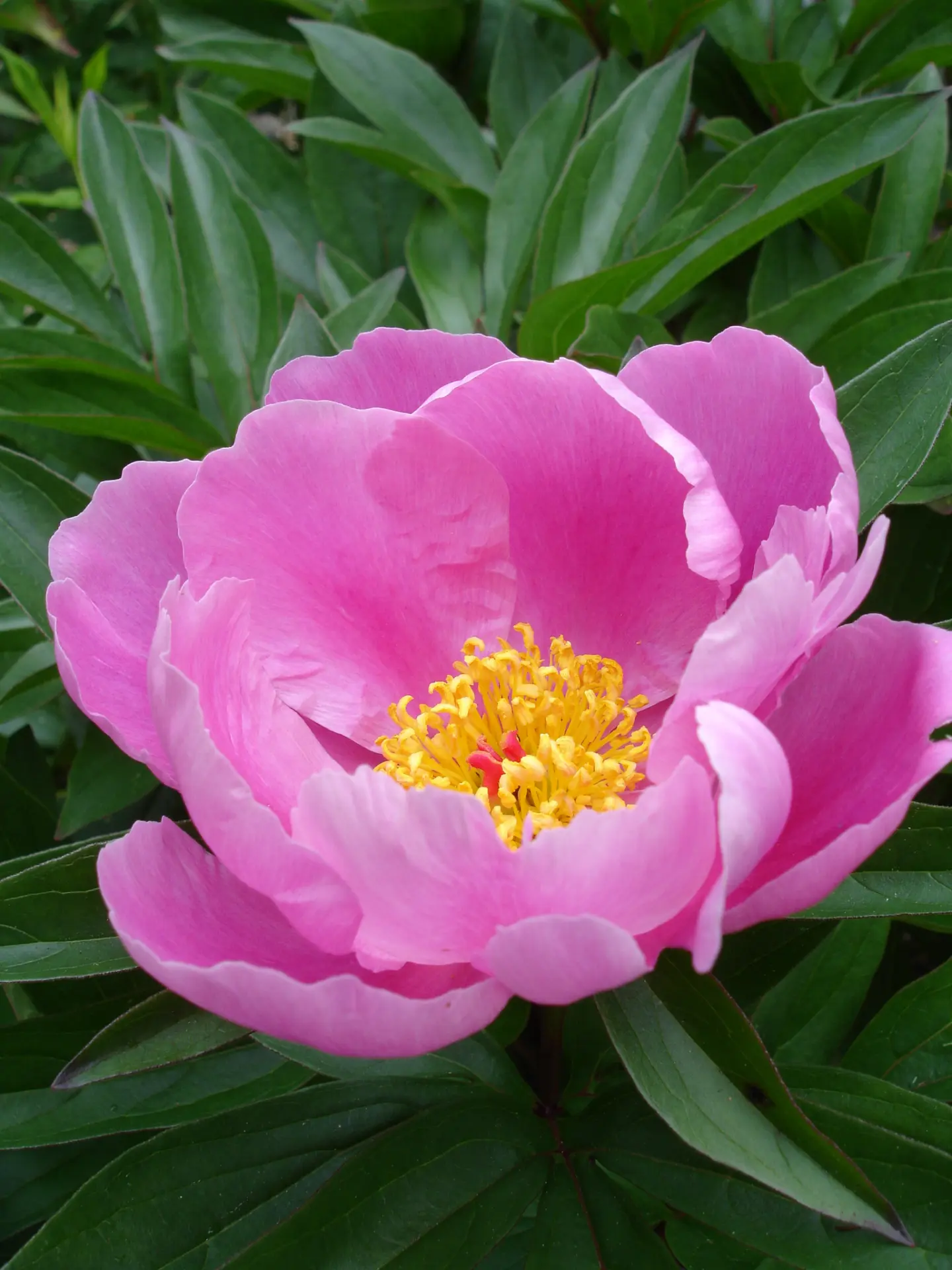
Photo: Ulf Eliasson · CC BY-SA 3.0, via Wikimedia Commons
Essential Care Requirements
Light
Full sun
Watering
Moderate
Water deeply in dry weather, especially in the first year.
Soil
Deep, fertile, well-drained soil; pH 6.5–7.5.
Temperature and humidity
-35–32 °C · Moderate humidity
Feeding
Feed lightly in spring with a balanced fertilizer; too much nitrogen reduces flowers.
Pruning and propagation
Propagate by division
Cut stems to the ground in autumn. Support heavy flowers with rings.
Peonies can cause vomiting and diarrhoea in cats and dogs.
Top Cultivation Tips
Plant the eyes (buds) no more than 5 cm deep, or it will not flower.
Avoid moving established plants.
Ants on buds are harmless.
Tree peonies are woody relatives.
Common problems
Grey mould
A fungal rot that covers flowers, fruit and soft stems with fuzzy grey mould in cool, damp conditions.
How to treat it →DiseaseLeaf spot
Fungal or bacterial infections that cause brown, black or purple spots on leaves, often with a yellow halo, leading to early leaf drop.
How to treat it →DiseasePowdery mildew
A fungal disease that coats leaves, buds and young shoots with a white, flour-like dust, weakening the plant and spoiling flowers and fruit.
How to treat it →