Peperomia
Peperomia spp.
Peperomias are compact houseplants with thick, often patterned or rippled leaves that store water. They stay small, tolerate moderate light, and are ideal for desks, shelves and small pots.
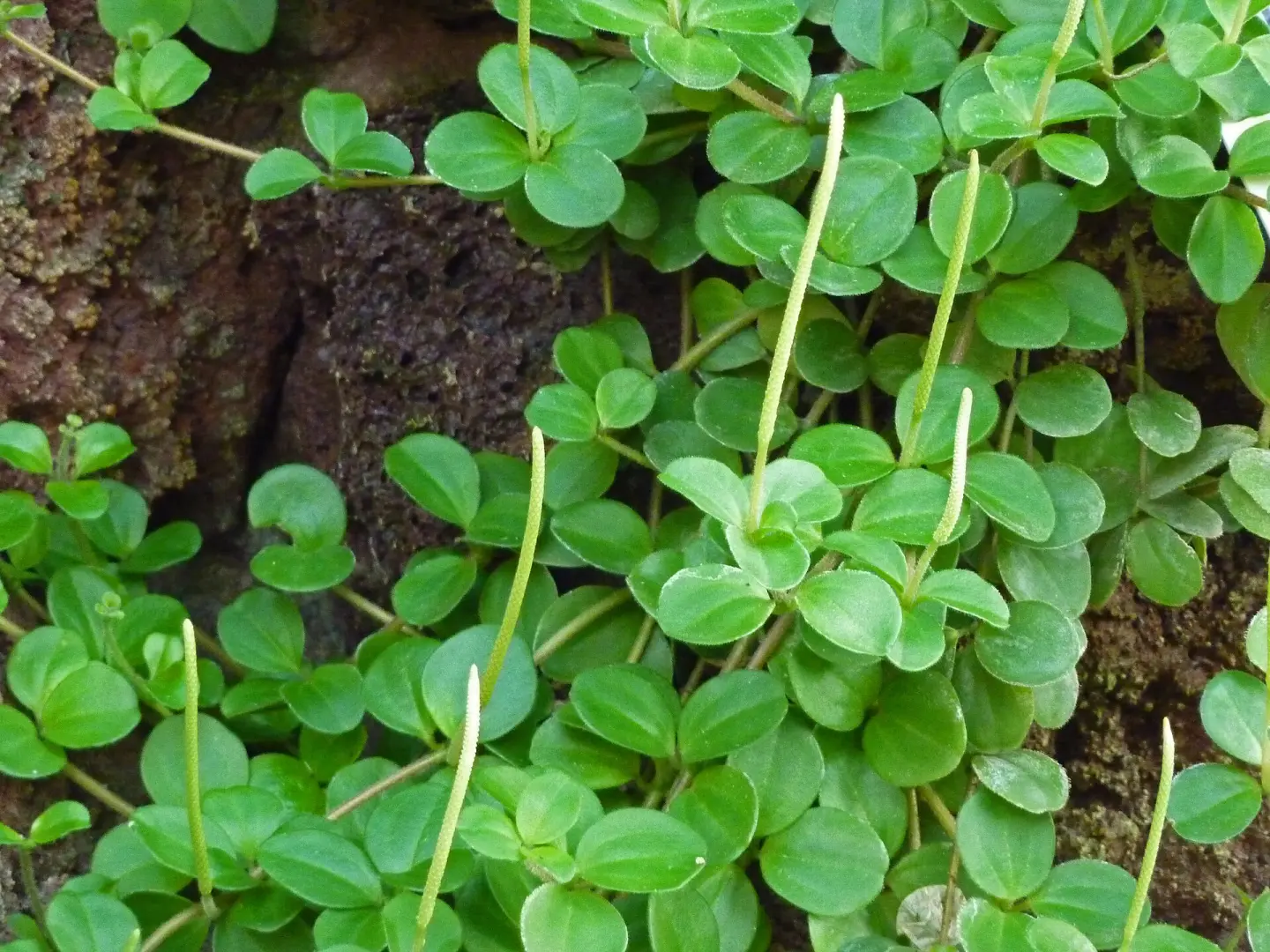
Photo: James Steakley · CC BY-SA 3.0, via Wikimedia Commons
Essential Care Requirements
Light
Bright indirect light, Low light
Watering
Low
Water when the top half of the soil is dry. Overwatering is the most common cause of problems.
Soil
Light, airy mix with cocopeat, bark and perlite; pH 6.0–6.5.
Temperature and humidity
15–30 °C · Moderate humidity
Feeding
Feed every six to eight weeks in spring and summer with a diluted fertilizer.
Pruning and propagation
Propagate by leaf cuttings, stem cuttings, division
Pinch leggy stems to keep plants compact.
Peperomias are not toxic to people, cats or dogs.
Top Cultivation Tips
Use a small pot; roots are shallow.
Root leaf cuttings in moist mix.
Variegated types need brighter light.
Keep away from cold draughts.
Common problems
Mealybugs
White, cottony insects that hide in leaf joints and under leaves, weakening plants and spreading easily to neighbours.
How to treat it →DiseaseOedema
Small blisters and corky bumps on leaf undersides, caused when roots take up water faster than the leaves can release it.
How to treat it →DiseaseRoot rot
Roots decay in waterlogged soil, so the plant wilts and yellows even though the soil is wet.
How to treat it →