Poinsettia
Euphorbia pulcherrima
Poinsettia is famous for its bright red, pink or cream bracts that colour up in winter as nights lengthen. In India it grows outdoors into a large shrub, and compact pot plants are popular at Christmas.
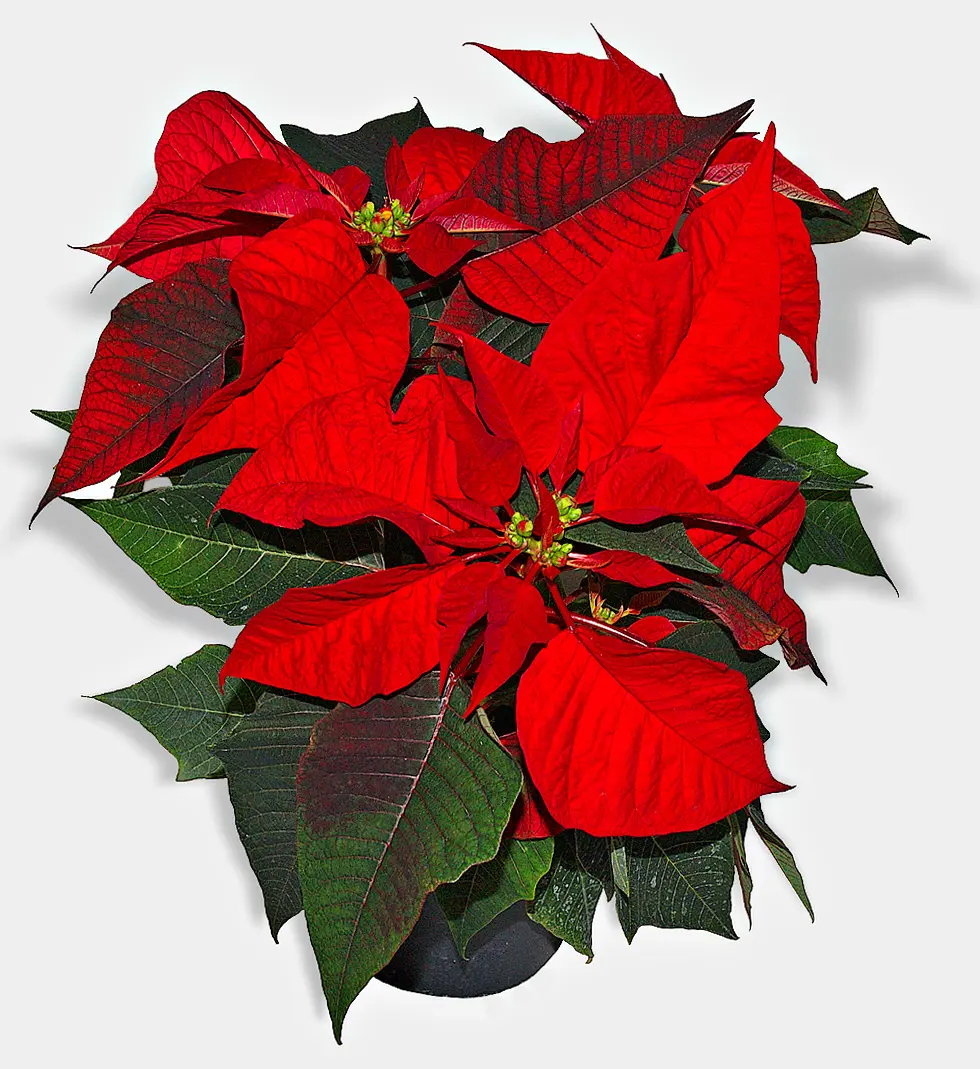
Photo: André Karwath aka Aka · CC BY-SA 2.5, via Wikimedia Commons
Essential Care Requirements
Light
Full sun, Bright indirect light
Watering
Moderate
Water when the top of the soil is dry. Overwatering causes leaf drop and root rot.
Soil
Well-drained, fertile potting mix; pH 5.5–6.5.
Temperature and humidity
12–35 °C · Moderate humidity
Feeding
Feed monthly from spring to autumn; stop when bracts colour.
Pruning and propagation
Propagate by stem cuttings
Cut back hard in spring after flowering, and pinch new shoots until August for a bushy plant.
Poinsettia is only mildly toxic: the milky sap can irritate skin and cause stomach upset in pets if chewed.
Top Cultivation Tips
Keep plants in total darkness for 14 hours each night from October to colour the bracts.
Avoid streetlight or room light at night in autumn.
Keep away from cold draughts.
Wear gloves when pruning.
Common problems
Leaf drop
A houseplant or shrub dropping many leaves at once, usually in reaction to a sudden change in light, temperature, watering or position.
How to treat it →PestMealybugs
White, cottony insects that hide in leaf joints and under leaves, weakening plants and spreading easily to neighbours.
How to treat it →DiseasePythium root rot
A water mould that attacks fine roots in wet, poorly drained or warm stagnant conditions, causing wilting and stunted plants.
How to treat it →DiseaseRhizoctonia rot
A soil-borne fungus that rots seedling stems, roots and cuttings, and causes dark scabby patches on potatoes and roots.
How to treat it →DiseaseRoot rot
Roots decay in waterlogged soil, so the plant wilts and yellows even though the soil is wet.
How to treat it →PestWhiteflies
Small white flying insects that gather under leaves, sucking sap, spreading viruses and leaving sticky honeydew.
How to treat it →