Rutabaga
Brassica napus (Napobrassica group)
Rutabaga, called swede in the UK, is a hardy root vegetable with sweet, yellow flesh, larger and milder than turnip. It is a staple of cold-climate winter cooking, from mashed "neeps" to soups and roasts.
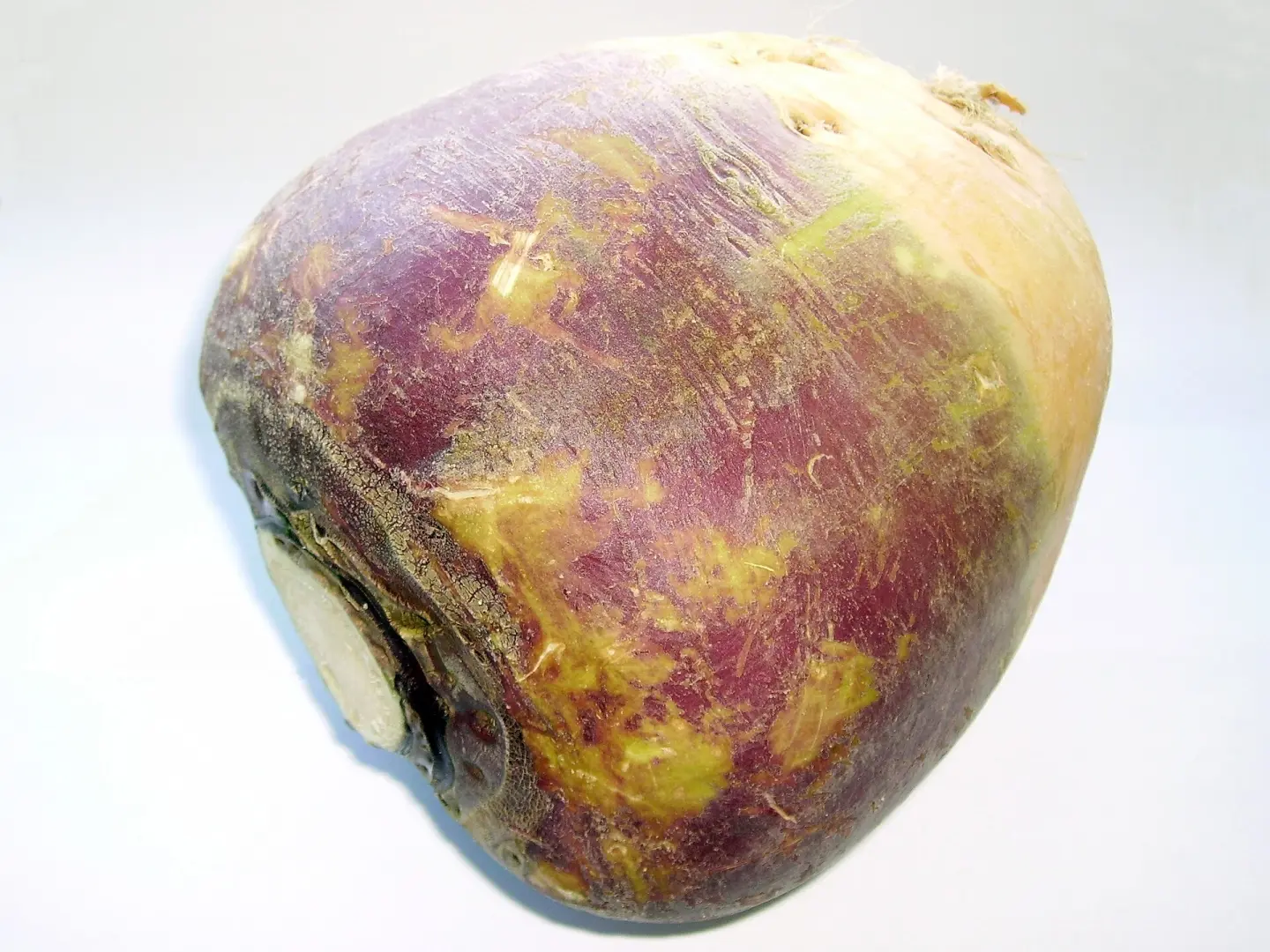
Photo: Garitzko · Public domain, via Wikimedia Commons
Essential Care Requirements
Light
Full sun
Watering
Moderate
Water regularly to avoid woody or split roots.
Soil
Firm, fertile, well-drained soil; pH 6.0–7.5.
Temperature and humidity
-10–25 °C · Moderate humidity
Feeding
Little feeding needed in fertile soil.
Pruning and propagation
Propagate by seed
No pruning needed. Thin seedlings to 25 cm apart.
Rutabaga is safe to eat.
Top Cultivation Tips
Sow in early summer for a fall crop.
Frost sweetens the roots.
Net against cabbage root fly and flea beetles.
Stores well in a cool place.
Common problems
Clubroot
A soil-borne disease of cabbage-family plants that causes swollen, distorted roots, wilting and stunted growth.
How to treat it →DiseaseCommon scab
A soil bacterium that causes rough, corky, scabby patches on potatoes and other root crops. It spoils the look but not the eating quality.
How to treat it →PestFlea beetles
Tiny, shiny jumping beetles that pepper the leaves of brassicas, radishes and aubergines with small holes.
How to treat it →DiseasePowdery mildew
A fungal disease that coats leaves, buds and young shoots with a white, flour-like dust, weakening the plant and spoiling flowers and fruit.
How to treat it →