Sea Holly
Eryngium planum
Sea hollies have spiny, silvery or blue flower heads, each framed by a spiky ruff, on branching metallic-blue stems. They thrive in hot, dry, poor soil, attract pollinators and look dramatic in gravel gardens and prairie planting.
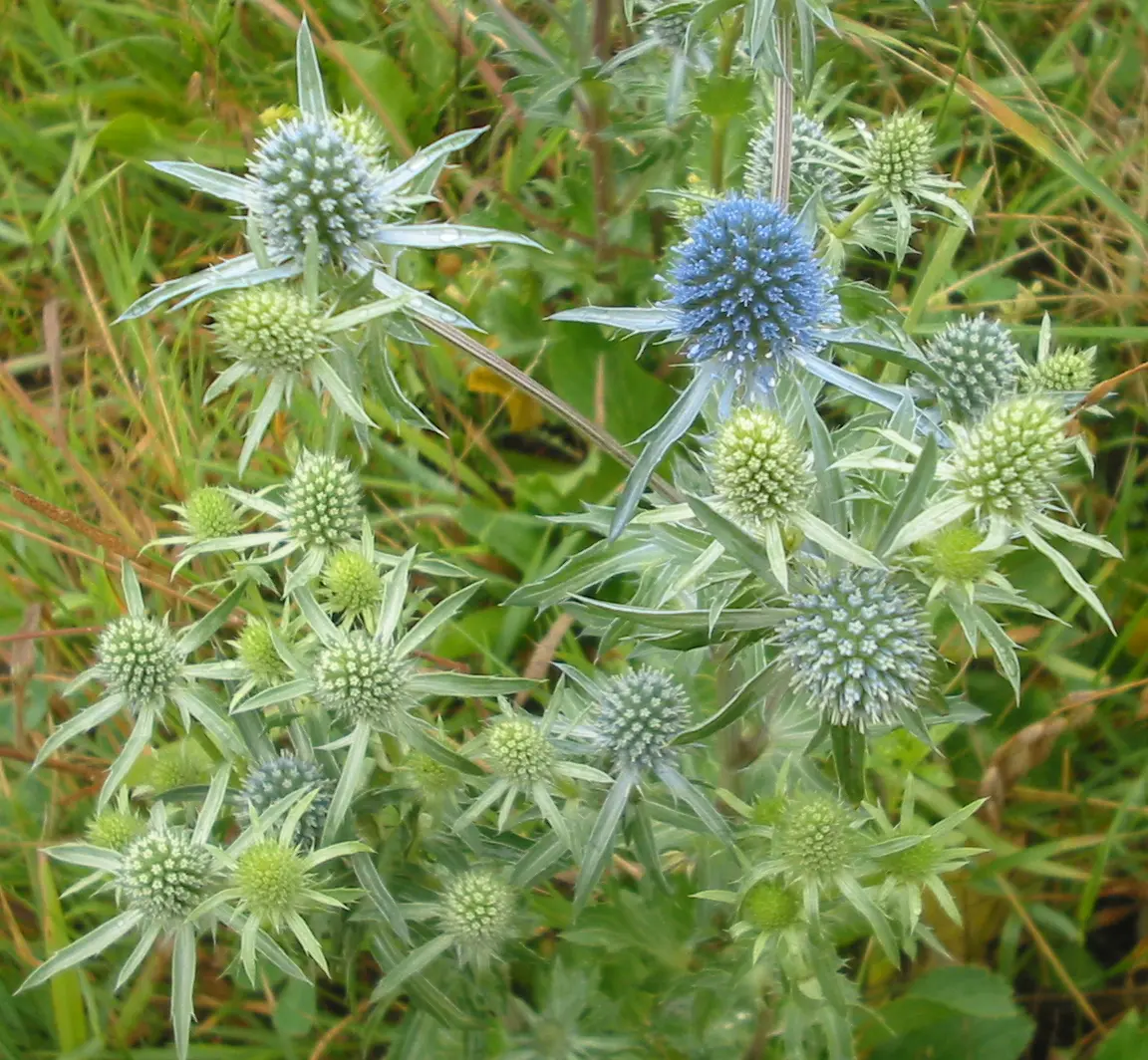
Photo: Bogdan · CC BY-SA 3.0, via Wikimedia Commons
Essential Care Requirements
Light
Full sun
Watering
Low
Water new plants until established, then rarely. They cope well with drought, salt spray and poor soil.
Soil
Light, very well-drained, even sandy or stony soil; pH 6.0 to 8.0.
Temperature and humidity
-25–35 °C · Low humidity
Feeding
No feeding needed.
Pruning and propagation
Propagate by seed, division
Cut spent flower stems to the base in autumn or leave them for winter interest and trim in early spring.
Non-toxic. The spiny bracts can scratch.
Top Cultivation Tips
Sow fresh seed in autumn and leave it outside over winter for natural chilling.
Plant in sun, as shade makes the stems floppy and green rather than blue.
Avoid disturbing established plants, as the long taproot resents it.
Cut stems for fresh or dried arrangements.
Common problems
Aphids
Small, soft-bodied insects that cluster on new shoots and buds, sucking sap and leaving sticky honeydew behind.
How to treat it →DiseasePowdery mildew
A fungal disease that coats leaves, buds and young shoots with a white, flour-like dust, weakening the plant and spoiling flowers and fruit.
How to treat it →DiseaseRoot rot
Roots decay in waterlogged soil, so the plant wilts and yellows even though the soil is wet.
How to treat it →PestSnails and slugs
Night-feeding molluscs that chew ragged holes in leaves, seedlings and soft stems, especially in wet weather.
How to treat it →