Sweet William
Dianthus barbatus
Sweet William is a cottage-garden favourite with flat, dense heads of clove-scented flowers in red, pink, white and bicolours. It is a short-lived perennial grown as a biennial: sown one summer, it flowers the next in late spring and early summer, and is excellent for cutting.
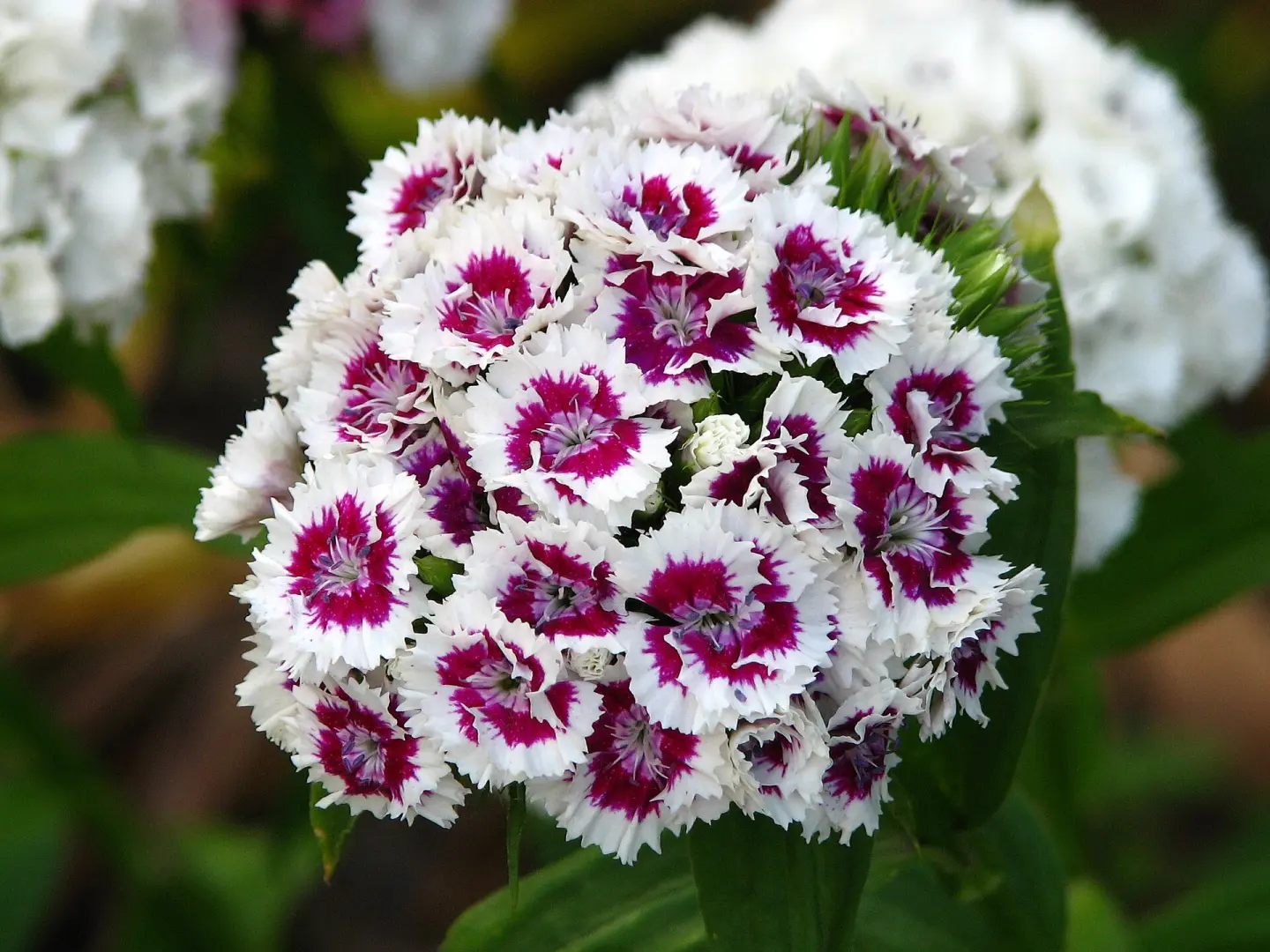
Photo: Kor!An (Андрей Корзун) · CC BY-SA 3.0, via Wikimedia Commons
Essential Care Requirements
Light
Full sun
Watering
Moderate
Water young plants regularly and established ones in dry spells. Avoid wet soil over winter, which rots the crowns.
Soil
Well-drained, fertile soil, neutral to slightly alkaline; pH 6.5 to 7.5.
Temperature and humidity
-15–30 °C · Moderate humidity
Feeding
Feed lightly in spring with a balanced fertilizer. Too much nitrogen gives leaves, not flowers.
Pruning and propagation
Propagate by seed, stem cuttings
Deadhead after flowering and cut stems back to the base to encourage a second flush or to let seed ripen.
Mildly toxic to cats and dogs if eaten in quantity. Safe to touch.
Top Cultivation Tips
Sow seed in early summer and move seedlings to their final spot in autumn.
Pinch out the centre of young plants for bushier growth.
Cut stems when about half the flowers are open for long-lasting bouquets.
Let a few plants set seed for next year's self-sown plants.
Common problems
Aphids
Small, soft-bodied insects that cluster on new shoots and buds, sucking sap and leaving sticky honeydew behind.
How to treat it →DiseaseRoot rot
Roots decay in waterlogged soil, so the plant wilts and yellows even though the soil is wet.
How to treat it →DiseaseRust
A fungal disease that forms orange, brown or yellow powdery pustules, mainly on leaf undersides.
How to treat it →PestSnails and slugs
Night-feeding molluscs that chew ragged holes in leaves, seedlings and soft stems, especially in wet weather.
How to treat it →