Tulip
Tulipa hybrids
Tulips are spring-flowering bulbs with elegant cup-shaped blooms in almost every colour. They need a cold winter to flower well, so in warm climates bulbs are pre-chilled and grown as annuals in pots.
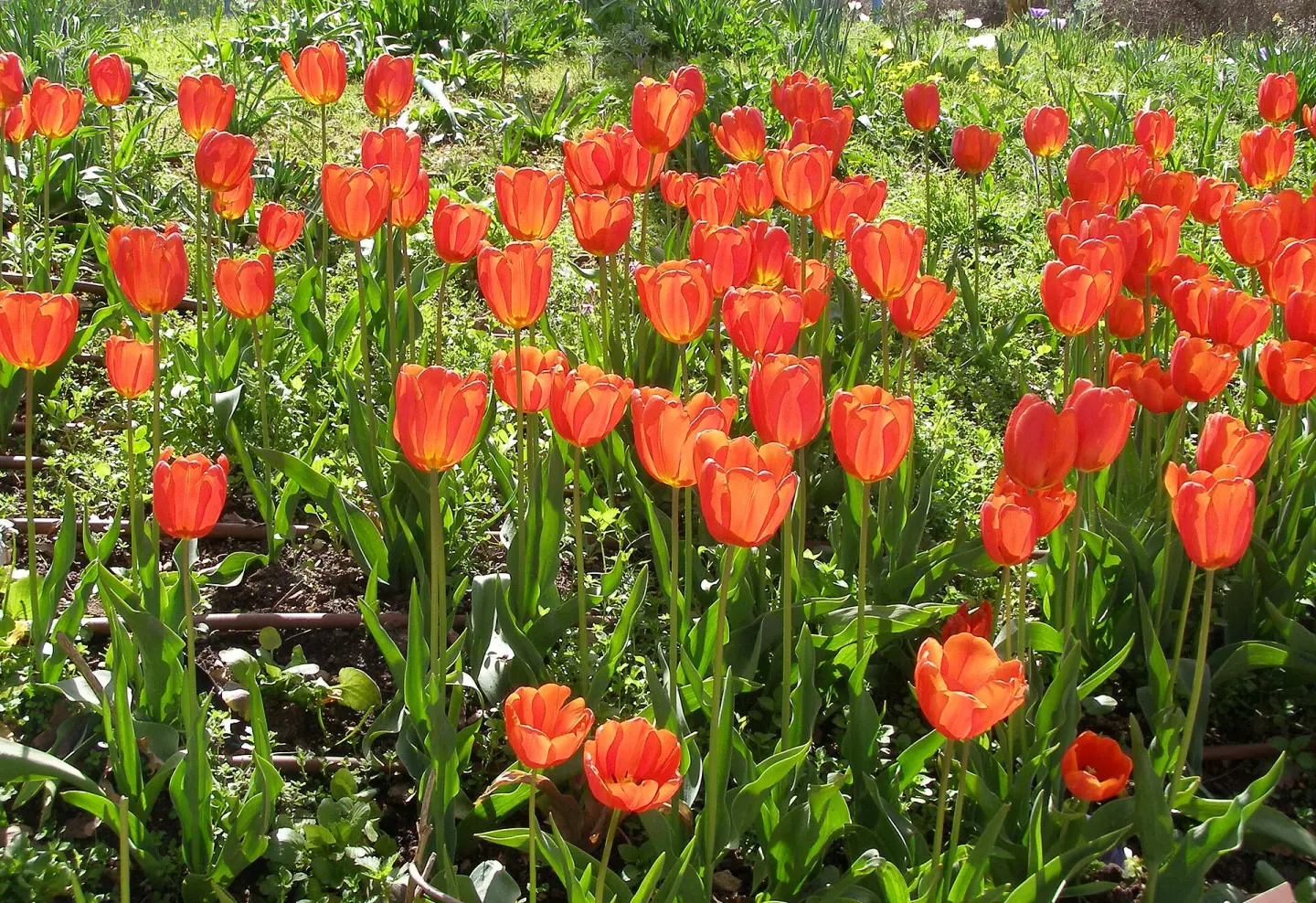
Photo: Dina L · CC0, via Wikimedia Commons
Essential Care Requirements
Light
Full sun
Watering
Moderate
Water after planting, then only in dry spells until shoots appear. Keep moist while growing and let the soil dry once the leaves yellow.
Soil
Well-drained, fertile soil; pH 6.0–7.0. Bulbs rot in wet soil.
Temperature and humidity
-25–25 °C · Moderate humidity
Feeding
Mix bulb fertilizer or bone meal into the planting hole, and feed with a potassium-rich fertilizer after flowering.
Pruning and propagation
Propagate by offsets
Snap off faded flowers, but leave the leaves until they turn yellow so the bulb can recharge.
Tulips, especially the bulbs, are toxic to cats and dogs. Handling bulbs can cause skin irritation in some people.
Top Cultivation Tips
Plant bulbs in autumn, three times as deep as their height.
In warm climates, chill bulbs in the fridge for 8–12 weeks before planting.
Plant in groups of 7–15 for impact.
Keep bulbs away from fruit in the fridge, as ethylene damages them.
Common problems
Aphids
Small, soft-bodied insects that cluster on new shoots and buds, sucking sap and leaving sticky honeydew behind.
How to treat it →PestDeer and rabbit damage
Deer and rabbits browse leaves, buds and bark, causing ragged stems, missing shoots and girdled trunks.
How to treat it →DiseaseGrey mould
A fungal rot that covers flowers, fruit and soft stems with fuzzy grey mould in cool, damp conditions.
How to treat it →PestPocket gophers
Burrowing rodents that eat roots, bulbs and tubers from below, leaving crescent-shaped soil mounds and plants that wilt or vanish.
How to treat it →PestRats and mice
Rodents that gnaw stored produce, seeds and bulbs, raid compost heaps and chew through stems, irrigation pipes and wiring.
How to treat it →DiseaseRoot rot
Roots decay in waterlogged soil, so the plant wilts and yellows even though the soil is wet.
How to treat it →PestSquirrels
Bushy-tailed rodents that dig up bulbs and seeds, strip bark, and eat fruit, nuts and sweetcorn.
How to treat it →PestVoles
Small rodents that gnaw bark at the base of young trees, eat bulbs and roots, and make runways through grass and mulch.
How to treat it →