Turnip
Brassica rapa subsp. rapa
Turnips are quick cool-season root vegetables with white or purple-topped roots and edible greens. They are ready in six to eight weeks and grow well in deep pots or beds.
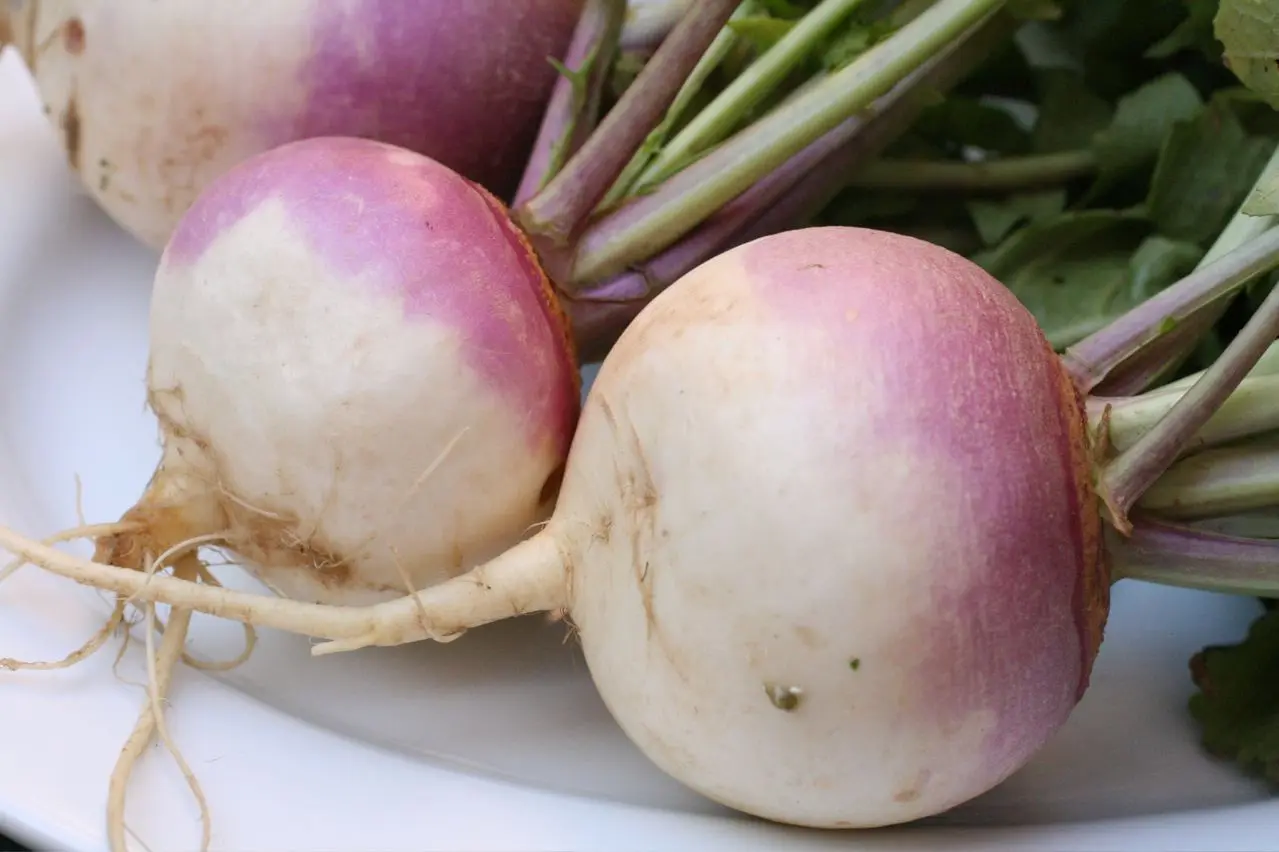
Photo: thebittenword.com · CC BY 2.0, via Wikimedia Commons
Essential Care Requirements
Light
Full sun, Partial sun
Watering
Moderate
Keep the soil evenly moist; dry spells make roots woody and hot.
Soil
Loose, fertile, well-drained soil; pH 6.0–7.5.
Temperature and humidity
4–25 °C · Moderate humidity
Feeding
Prepare the soil with compost; no further feeding is usually needed.
Pruning and propagation
Propagate by seed
No pruning needed. Thin seedlings to 10–15 cm apart.
Roots and leaves are safe to eat.
Top Cultivation Tips
Sow directly from October to December.
Harvest roots at 5–8 cm across for the best texture.
Cook young leaves as greens.
Net against cabbage butterflies.
Common problems
Aphids
Small, soft-bodied insects that cluster on new shoots and buds, sucking sap and leaving sticky honeydew behind.
How to treat it →DiseaseBoron deficiency
A trace-element shortage that causes hollow stems, brown hearts in roots and brassica heads, and cracked, corky growth.
How to treat it →PestCabbage root fly
A small fly whose white maggots eat the roots of cabbage-family crops and radishes, causing wilting and stunted plants.
How to treat it →PestCaterpillars
The larvae of moths and butterflies, which chew holes in leaves, flowers and fruit and can strip a plant in days.
How to treat it →DiseaseClubroot
A soil-borne disease of cabbage-family plants that causes swollen, distorted roots, wilting and stunted growth.
How to treat it →DiseaseCommon scab
A soil bacterium that causes rough, corky, scabby patches on potatoes and other root crops. It spoils the look but not the eating quality.
How to treat it →PestFlea beetles
Tiny, shiny jumping beetles that pepper the leaves of brassicas, radishes and aubergines with small holes.
How to treat it →DiseaseWhite rust
A disease that forms white, chalky blisters on the undersides of leaves of mustard greens, amaranth, radish and other leafy crops.
How to treat it →