Verbascum
Verbascum chaixii
Verbascums send up tall, architectural spires of yellow, white, pink or apricot flowers above rosettes of felted leaves. They thrive in poor, dry, sunny soil, are loved by bees and are short-lived perennials that often self-seed.
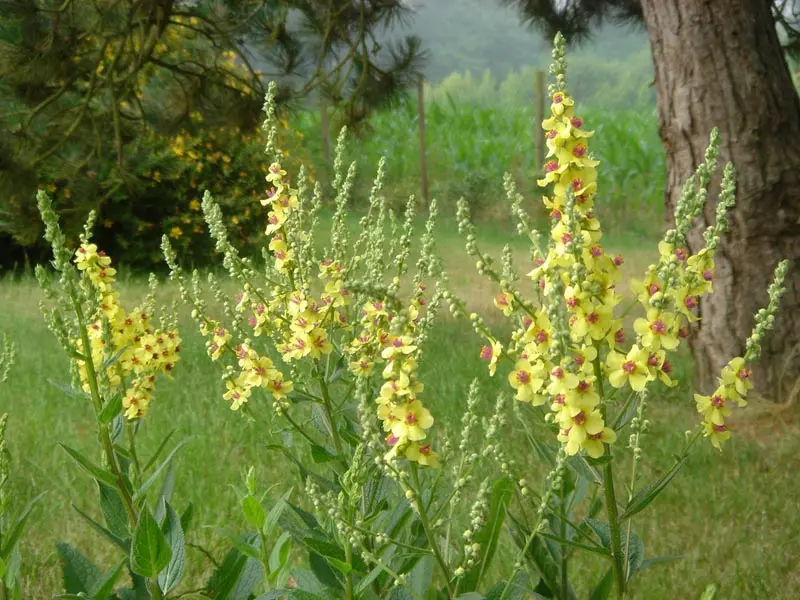
Photo: Ghislain118 · CC BY-SA 3.0, via Wikimedia Commons
Essential Care Requirements
Light
Full sun
Watering
Low
Water new plants until they root in. After that they need very little, and wet soil in winter is their main enemy.
Soil
Poor to average, very well-drained soil; neutral to alkaline; pH 6.5 to 8.0.
Temperature and humidity
-20–32 °C · Low humidity
Feeding
No feeding. Rich soil makes them floppy.
Pruning and propagation
Propagate by seed, division
Cut spent spikes to the base to prolong flowering and prevent heavy seeding.
Leaves and seeds are mildly toxic to pets and people if eaten.
Top Cultivation Tips
Plant in autumn or spring in the sunniest, driest spot.
Keep an eye out for mullein moth caterpillars in early summer.
Take root cuttings in winter to keep named varieties.
Cut back after flowering to get a second flush of smaller spikes.
Common problems
Caterpillars
The larvae of moths and butterflies, which chew holes in leaves, flowers and fruit and can strip a plant in days.
How to treat it →DiseasePowdery mildew
A fungal disease that coats leaves, buds and young shoots with a white, flour-like dust, weakening the plant and spoiling flowers and fruit.
How to treat it →DiseaseRoot rot
Roots decay in waterlogged soil, so the plant wilts and yellows even though the soil is wet.
How to treat it →PestSawfly larvae
Caterpillar-like larvae of sawflies that can strip gooseberries, currants and roses of their leaves in days.
How to treat it →